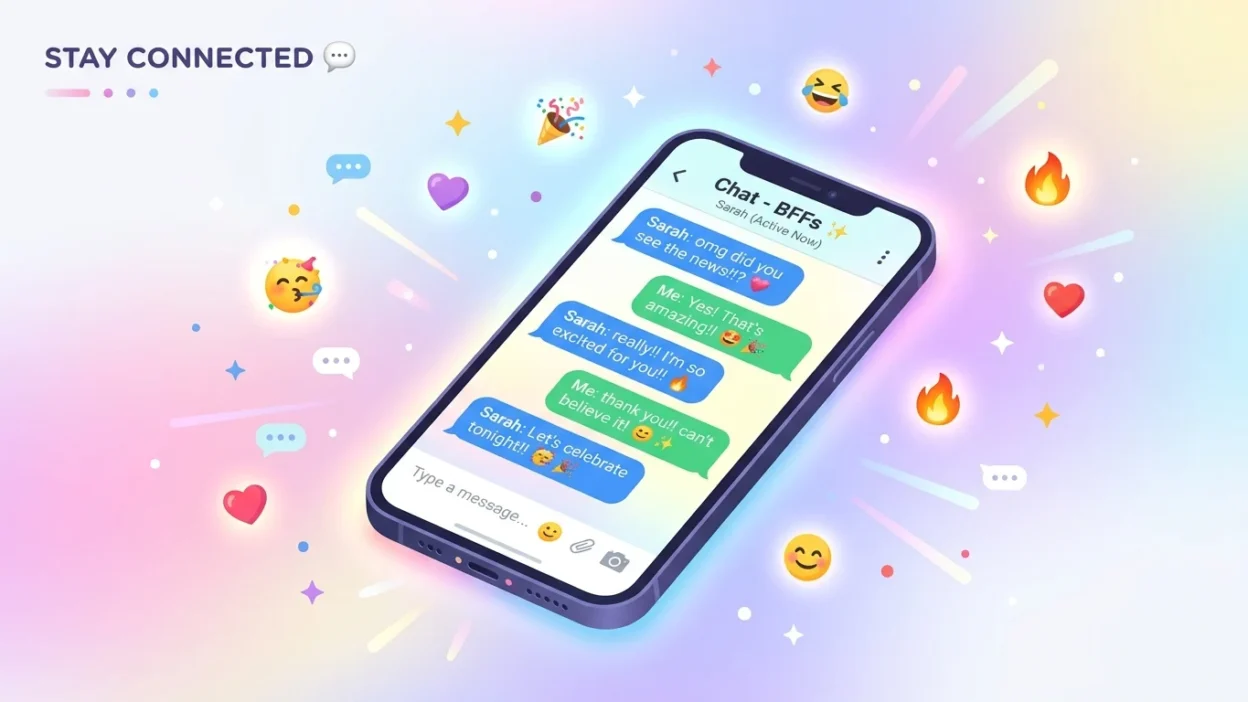
Have you ever opened a chat and seen someone reply with “really!!” or “that’s amazing!!” and wondered why there are two exclamation marks instead of one? It might look small, but it can totally change the feeling of a message. Many people first notice the double exclamation mark meaning when texting friends, scrolling through social media comments, or chatting in online games. At first, it can feel confusing—are they shouting, excited, or just typing fast?
The truth is, this tiny punctuation mark is a big part of modern texting culture. It helps people show strong emotion without using extra words. Once you understand it, you’ll start seeing it everywhere online.
Quick Answer: A double exclamation mark (!!) in text means strong emotion such as excitement, surprise, urgency, or emphasis.
What Does Double Exclamation Mark (!!) Mean in Text?
The double exclamation mark (!!) is not a formal abbreviation or full form. Instead, it is a piece of punctuation used in informal digital communication.
In simple words, it means someone is trying to show extra emotion or emphasis in what they are saying. One exclamation mark already shows excitement or strong feeling, but two exclamation marks make it even stronger.
People use it in texting, social media, and chats to make their message feel more expressive and energetic. It can show:
- excitement (“that’s awesome!!”)
- surprise (“really!!”)
- urgency (“hurry up!!”)
- strong agreement (“yes!!”)
Example Sentence:
“I can’t believe we won the match!!”
Bold Summary: The double exclamation mark (!!) is used to express stronger emotions like excitement, shock, or urgency in informal online communication.
Where Is Double Exclamation Mark Commonly Used?
The double exclamation mark meaning in texting is mostly found in casual digital spaces. It is not commonly used in formal writing like emails, essays, or business messages.
You will often see it in:
1. Text Messages (SMS & Chat Apps)
Friends use it to sound more expressive and lively.
2. Social Media Platforms
It appears in comments, captions, and replies on platforms like Instagram, Facebook, and TikTok.
3. Gaming Chats
Players use it to react quickly during matches (“let’s go!!”).
4. Online Forums & Communities
People use it to emphasize opinions or reactions.
Tone of Usage:
The tone is usually casual and informal, sometimes even playful or emotional. It is rarely neutral or formal.
Real-Life Chat Examples (Modern Texting Style)
Here are some natural examples of how people use the double exclamation mark in everyday chats:
- “omg that was insane!!”
- “you’re coming too!! that’s awesome”
- “wait really!! i didn’t know that”
- “we won the game!! let’s go”
- “hurry up!! we’re already late”
- “that movie was so good!!”
- “no way!! are you serious”
- “thanks so much!! you’re the best”
- “i got the job!! finally”
These examples show how the double exclamation mark makes messages feel more emotional, energetic, and expressive.
When to Use and When Not to Use !!
Understanding the texting slang meaning of double exclamation marks is important so you don’t overuse or misuse them.
✔ When to Use It:
- When you are excited or happy
- When reacting to surprising news
- When showing urgency
- When chatting with friends
- When writing informal social media posts
❌ When NOT to Use It:
- Formal emails or job applications
- Academic writing or essays
- Professional messages
- Serious or sensitive conversations
- Customer service communication
Comparison Table
| Context | Example Phrase | Why It Works / Doesn’t Work |
|---|---|---|
| Casual chat | “that’s amazing!!” | Shows excitement naturally |
| Social media comment | “love this!!” | Fits informal tone |
| Work email | “please send the report!!” | Too aggressive for formal use |
| School essay | “history is important!!” | Not appropriate in academic writing |
Similar Slang Words or Alternatives
The double exclamation mark meaning in social media slang is closely related to other punctuation and text expressions that show emotion.
1. Single Exclamation Mark (!)
Used for excitement, but less intense.
- Example: “that’s great!”
2. ALL CAPS
Used to show strong emotion or shouting.
- Example: “THAT’S AMAZING”
3. Emojis
Replace punctuation with visual emotion.
- Example: “that’s amazing 😍”
4. Multiple Exclamation Marks (!!!)
Even stronger emotion, sometimes seen as overexcited.
- Example: “no way!!!”
5. Period + Exclamation mix (!.)
Rare, used for dramatic tone in some chats.
Each of these tools helps express emotion in online chat meaning and texting culture, depending on how strong or soft you want your message to sound.
FAQ: Double Exclamation Mark Meaning
1. What does (!!) mean in texting?
It means strong emotion such as excitement, surprise, or urgency in informal messages.
2. Is double exclamation mark rude?
No, it is not rude. But in formal situations, it may seem too emotional or informal.
3. Why do people use two exclamation marks instead of one?
People use two marks to show stronger feelings or emphasize their message more clearly.
4. Is (!!) used in professional writing?
No, it is generally avoided in professional or academic writing.
5. What age group uses double exclamation marks the most?
Teenagers and young adults use it most in texting and social media chats.
6. Can double exclamation marks change meaning?
Yes, they can make a message sound more excited, urgent, or emotional than a single mark.
7. Is it okay to overuse (!!) in chats?
It’s better not to overuse it because it can make messages feel exaggerated or less serious.
Final Thought
The double exclamation mark (!!) is a small but powerful part of modern digital communication. It helps people express strong emotions like excitement, surprise, or urgency in a quick and simple way. While it works great in casual texting, social media, and gaming chats, it should be avoided in formal or professional writing.
Understanding the double exclamation mark meaning in text slang helps you read conversations better and express yourself more naturally online. In today’s fast-moving chat culture, even tiny symbols like !! can completely change the tone of a message.