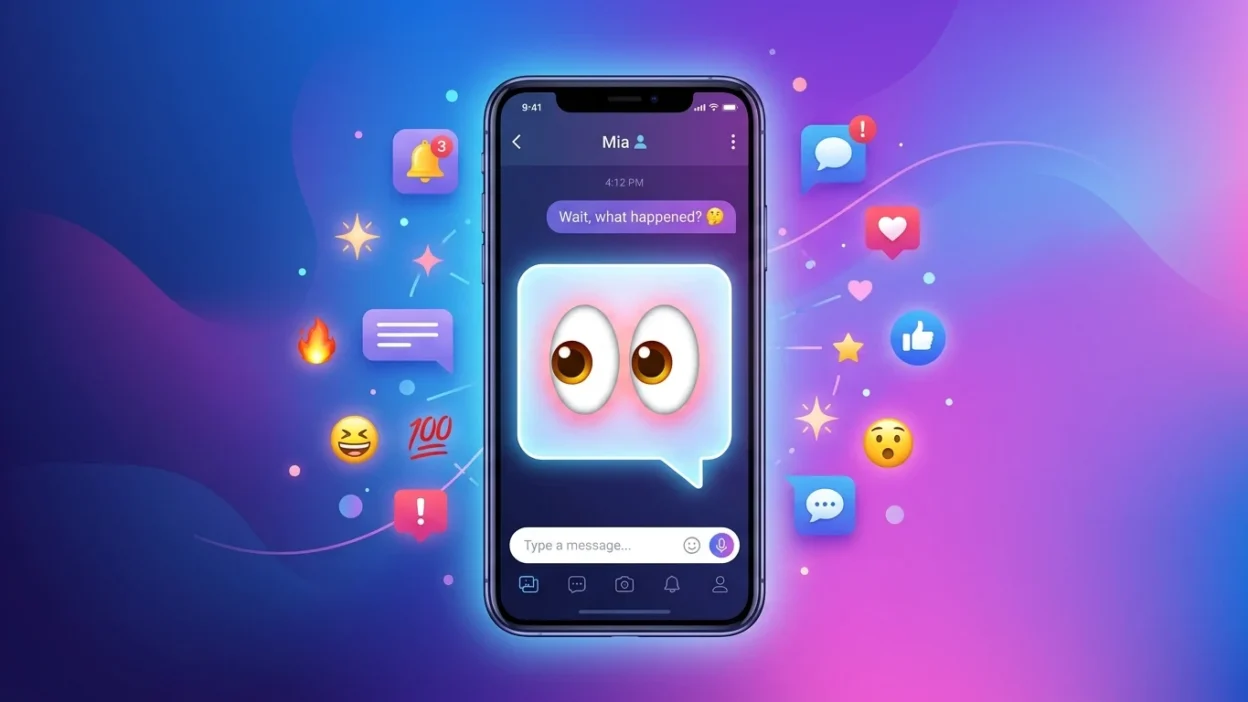
Have you ever opened WhatsApp, Instagram, or Snapchat and suddenly seen someone send just “👀” with no words? At first, it feels a bit strange. You might wonder if the person is joking, watching something, or trying to hint at something secret. Many people even pause for a second and re-read the message, trying to figure out what it really means.
This tiny emoji is surprisingly powerful in online chats. It doesn’t look like much, but it can change the whole tone of a conversation. Whether it’s used in comments, DMs, or group chats, the 👀 emoji has become a popular way to show curiosity, attention, or hidden meaning in modern texting culture.
Quick Answer: The 👀 emoji in text usually means someone is watching, paying attention, or reacting with curiosity or surprise.
Meaning of 👀 in Text (Eye Emoji Meaning)
The 👀 emoji meaning in text is simple but flexible. It represents “eyes,” and in online conversations, it is used to show that someone is looking closely at something, paying attention, or reacting to something interesting.
There is no full form of the emoji because it is a symbol, not an abbreviation. Instead, its meaning depends on the context of the conversation.
What it usually means:
- 👀 “I’m watching this”
- 👀 “I see what you did there”
- 👀 “Tell me more”
- 👀 “This is interesting”
- 👀 “Something suspicious is going on”
People use the 👀 emoji because it is short, expressive, and works in almost any casual online situation. Instead of typing a full sentence like “I’m paying attention,” they simply send 👀.
Example sentence:
“you finally replied to her message 👀”
Bold Summary: The 👀 emoji is used in texting to show attention, curiosity, or reaction to something interesting or suspicious.
Where 👀 Is Commonly Used in Texting
The eye emoji meaning in chat is widely used across different digital platforms. It fits perfectly in fast, informal communication where people prefer emojis instead of full sentences.
You will often see 👀 in:
- Text messaging apps like WhatsApp and iMessage
- Social media platforms such as Instagram, TikTok, and Facebook
- Comments sections under posts or videos
- Direct messages (DMs) between friends or followers
- Gaming chats when reacting to something surprising
- Online forums and meme pages
Tone of the emoji:
The 👀 emoji is informal and casual. It is not used in professional or formal writing. Instead, it belongs to internet slang and modern chat culture.
It can sometimes feel:
- playful
- curious
- teasing
- slightly suspicious
- dramatic (in a funny way)
7–10 Real Conversation Examples Using 👀
Here are some natural texting-style examples to help you understand how people use the 👀 emoji in real chats:
“you said you were offline last night 👀”
“oh so now you’re ignoring my texts 👀”
“that update on your story is interesting 👀”
“wait… did you just like her post 👀”
“something feels off about this 👀”
“you and him were talking a lot today 👀”
“so you finally decided to go outside 👀”
“that ending of the movie was wild 👀”
“you’ve been quiet all day 👀”
“i saw what you did there 👀”
These examples show how the emoji adds emotion or hidden meaning without using extra words.
When to Use and When Not to Use 👀
Like most texting abbreviations and social media slang, the 👀 emoji should be used in the right context to avoid confusion.
✔ When to Use 👀:
- Reacting to gossip or interesting news
- Showing curiosity in a conversation
- Playfully teasing someone
- Responding to surprising messages
- Commenting on social media posts
- Highlighting something suspicious or funny
✘ When NOT to Use 👀:
- Professional emails or work chats
- Serious conversations (medical, legal, emotional)
- Formal writing or school assignments
- Situations where clarity is more important than emotion
- Conversations with people unfamiliar with emoji slang
Quick Comparison Table
| Context | Example Phrase | Why It Works / Doesn’t Work |
|---|---|---|
| Casual chat | “you really did that 👀” | Works because it adds playful curiosity |
| Work email | “please review the report 👀” | Not appropriate for formal tone |
| Friend gossip | “she said what 👀” | Works well for reaction and surprise |
| Serious talk | “we need to discuss this 👀” | Not ideal, may feel unprofessional |
Similar Emoji and Slang Alternatives
The 👀 emoji meaning in text is closely related to other emojis and slang used in online chat culture. Here are some common alternatives:
1. 🤔 (Thinking Face)
Used when someone is confused or thinking deeply.
Example: “that doesn’t make sense 🤔”
2. 😏 (Smirking Face)
Used to show teasing, sarcasm, or hidden meaning.
Example: “oh really now 😏”
3. 😳 (Flushed Face)
Used for shock, embarrassment, or surprise.
Example: “you did what 😳”
4. “I see you”
A slang phrase that means noticing someone’s actions.
Example: “i see you trying 👀”
5. “spill the tea”
Used when asking for gossip or details.
Example: “spill the tea 👀”
Each of these expressions works similarly to 👀 by adding emotion or hidden meaning to short messages.
FAQs About 👀 Meaning in Text
1. What does the 👀 emoji mean in texting?
It usually means someone is watching, paying attention, or reacting with curiosity.
2. Is 👀 a positive or negative emoji?
It can be both. It depends on the context—sometimes playful, sometimes suspicious.
3. Where is the 👀 emoji most commonly used?
It is popular on Instagram, Snapchat, TikTok, WhatsApp, and in online chats.
4. Can I use 👀 in formal communication?
No, it is only suitable for informal or casual conversations.
5. Why do people send just 👀 without words?
Because it quickly expresses curiosity or reaction without needing a full sentence.
6. Does 👀 mean gossip?
Not always, but it is often used when reacting to interesting or slightly suspicious information.
7. Is 👀 used by all age groups?
Mostly younger internet users use it, but it is widely understood across different ages online.
Final Thought
The 👀 meaning in text is a perfect example of how simple emojis have changed modern communication. Instead of typing long reactions, people now use a small symbol to express curiosity, attention, or playful suspicion. It fits perfectly into today’s fast-paced texting culture, where short, expressive messages are more powerful than full sentences.
Understanding emojis like 👀 helps you stay updated with social media slang and informal chat meanings, making your online conversations more natural and relatable. Just remember to use it in the right context so your message feels fun, not confusing.

Michel Clark is an emerging author and content creator behind Ribacks.com, where he writes insightful articles on [your niche/topics e.g., lifestyle, tech, personal growth]. Known for fresh perspectives and engaging storytelling, Clark is building a growing readership with thoughtful writing and meaningful connections in the online community.