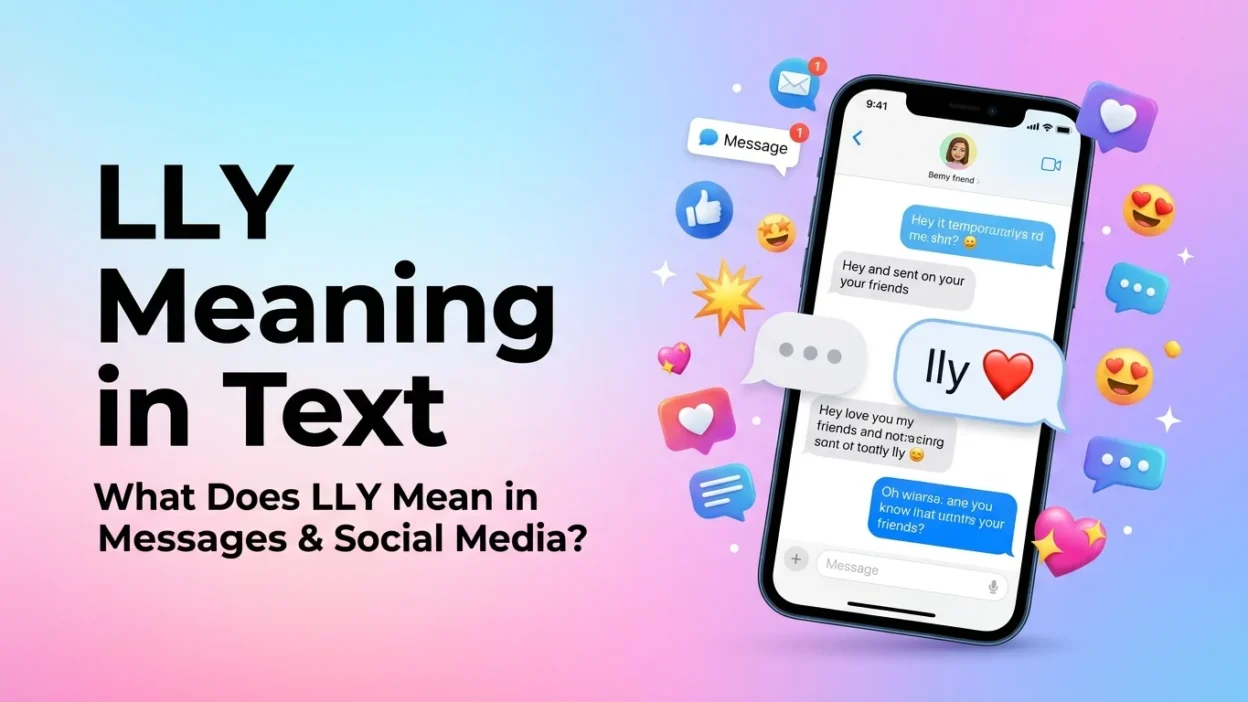
Have you ever opened a text message, Snapchat, or Instagram DM and seen someone type “LLY” at the end of a conversation? Maybe a friend sent, “goodnight, lly ❤️,” and you wondered what those three letters meant. Many people come across this texting abbreviation for the first time while chatting online and feel confused because it is not as common as slang like “LOL” or “BRB.” The good news is that the meaning is simple and positive. Once you understand it.
you’ll start noticing it everywhere in texting culture, social media messages, and casual online chats.
Quick Answer: LLY means “Love Like You” or, more commonly in texting, “Love You Lots.”
What Does LLY Mean in Text?
In modern texting and social media slang, LLY usually stands for “Love You Lots.”
People use it as a quick and friendly way to express affection, appreciation, or care toward someone. It is often sent to close friends, family members, romantic partners, or anyone the sender feels warmly toward.
Because texting encourages short and fast communication, abbreviations like LLY help people share feelings without typing a full sentence.
Plain-English Meaning
When someone types LLY, they are basically saying:
- “I care about you.”
- “Love you.”
- “Love you very much.”
- “You mean a lot to me.”
The exact meaning can depend on the relationship between the people chatting, but the overall message is positive and affectionate.
Why Do People Use LLY?
People use LLY because:
- It is short and easy to type.
- It sounds warm and friendly.
- It saves time in casual conversations.
- It fits naturally into texting culture.
- It helps express emotions quickly.
Example Sentence
“thanks for always being there for me, lly ❤️”
Summary: LLY is a texting abbreviation that usually means “Love You Lots,” used to show affection, care, or appreciation in casual conversations.
Where Is LLY Commonly Used?
You will mostly see LLY in informal digital communication rather than formal writing.
Common places include:
Text Messages
Friends and family often use LLY at the end of conversations to show affection.
Social Media DMs
On platforms like Instagram, TikTok, Snapchat, and Facebook Messenger, people use LLY in private messages.
Social Media Comments
Someone might comment LLY on a friend’s post as a supportive or affectionate response.
Gaming Chats
Although less common, close online friends sometimes use LLY during friendly gaming conversations.
Online Communities
People in online groups, fandoms, and forums occasionally use LLY when expressing appreciation for someone.
Tone of LLY
The tone is generally:
- Casual
- Informal
- Friendly
- Affectionate
It is not considered formal and is usually best reserved for personal conversations.
Realistic Conversation Examples
Here are some natural examples showing how LLY appears in modern chats.
Example 1
alex: thanks for helping me study today
mia: no problem, lly 💕
Example 2
emma: hope your interview goes well tomorrow
sara: thank you, lly
Example 3
josh: goodnight, talk tomorrow
olivia: goodnight, lly ❤️
Example 4
ben: you always know how to cheer me up
kate: aww, lly
Example 5
lena: made it home safe
zoe: glad to hear that, lly
Example 6
max: thanks for the birthday gift
ella: you’re welcome, lly
Example 7
amy: i miss hanging out with you
julia: same here, lly
Example 8
ryan: thanks for checking on me
noah: anytime, lly bro
Example 9
ava: you’re honestly the best friend ever
chloe: stoppp 😭 lly
When to Use LLY
Knowing when to use a texting abbreviation is important. While LLY works great in many casual situations, it is not appropriate everywhere.
Use LLY When:
✅ Talking with close friends
✅ Messaging family members
✅ Chatting with a boyfriend, girlfriend, or partner
✅ Sending supportive messages
✅ Ending casual conversations warmly
✅ Replying to kind or thoughtful messages
Do Not Use LLY When:
❌ Writing professional emails
❌ Communicating with teachers or professors
❌ Sending formal business messages
❌ Writing official documents
❌ Talking to someone who may not understand internet slang
❌ Situations requiring professional language
Context Comparison Table
| Context | Example Phrase | Why It Works or Doesn’t Work |
|---|---|---|
| Friend texting | “thanks for today, lly” | Works because the tone is casual and friendly |
| Family chat | “goodnight, lly ❤️” | Works because it expresses affection |
| Romantic chat | “can’t wait to see you, lly” | Works because it shows care |
| Work email | “thank you for attending the meeting, lly” | Doesn’t work because it is too informal |
| School assignment | “lly everyone” | Doesn’t work because academic writing should be formal |
Similar Slang Words and Alternatives
If you understand LLY, you may also come across these related text slang terms.
| Slang | Meaning | Best Time to Use |
|---|---|---|
| LY | Love You | Quick personal messages |
| ILY | I Love You | Stronger expression of affection |
| ILYSM | I Love You So Much | Emotional or heartfelt chats |
| XOXO | Hugs and Kisses | Friendly or affectionate messages |
| BFF | Best Friends Forever | Close friendships |
| TYSM | Thank You So Much | Showing gratitude |
| AWW | Expression of affection or appreciation | Reacting to sweet messages |
| <3 | Heart symbol meaning love | Casual online conversations |
LY
A shorter version of “Love You.” It is simple and often used between people who already know each other well.
ILY
One of the most popular texting abbreviations. It directly means “I Love You” and is usually stronger than LLY.
ILYSM
This stands for “I Love You So Much.” It is often used when someone wants to show extra emotion.
XOXO
A classic online expression meaning hugs and kisses. It has a warm and affectionate tone.
Why LLY Is Popular in Texting Culture
Texting culture moves quickly. People want to communicate emotions without typing long messages every time.
Abbreviations like LLY became popular because they:
- Save time.
- Feel personal.
- Fit social media communication.
- Make conversations feel warm and friendly.
- Allow users to express emotions with just a few characters.
As messaging apps continue to dominate communication, shorthand expressions like LLY remain an important part of online chat meaning and digital slang.
Frequently Asked Questions (FAQ)
What does LLY mean in text messages?
LLY most commonly means “Love You Lots.” It is used to express affection, appreciation, or care.
Is LLY romantic?
It can be, but not always. Friends, family members, and romantic partners all use LLY in different situations.
Is LLY the same as ILY?
Not exactly. ILY means “I Love You,” while LLY usually means “Love You Lots.” Both express affection, but ILY can feel stronger.
Is LLY considered formal?
No. LLY is an informal texting abbreviation and should be used in casual conversations.
Who uses LLY the most?
Teenagers, young adults, and active social media users commonly use LLY, although people of all ages may use it.
Can LLY be misunderstood?
Sometimes. Because internet slang changes over time, a few people may not know what it means. If you’re unsure, spelling out “love you lots” may be clearer.
Is LLY popular on social media?
Yes. LLY appears in DMs, comments, captions, Snapchat messages, and other forms of online communication.
Final Thought
Understanding LLY Meaning in Text is simple once you know the basics. In most cases, LLY means “Love You Lots,” a warm and friendly texting abbreviation used to show affection, appreciation, and care. It is most common in casual conversations between friends, family members, and loved ones across social media platforms, text messages, and online chats. Like many forms of chat shorthand, LLY helps people communicate emotions quickly while keeping conversations personal and meaningful. Knowing what it means can help you better understand modern texting culture and confidently use the term when the situation feels right.

Michel Clark is an emerging author and content creator behind Ribacks.com, where he writes insightful articles on [your niche/topics e.g., lifestyle, tech, personal growth]. Known for fresh perspectives and engaging storytelling, Clark is building a growing readership with thoughtful writing and meaningful connections in the online community.