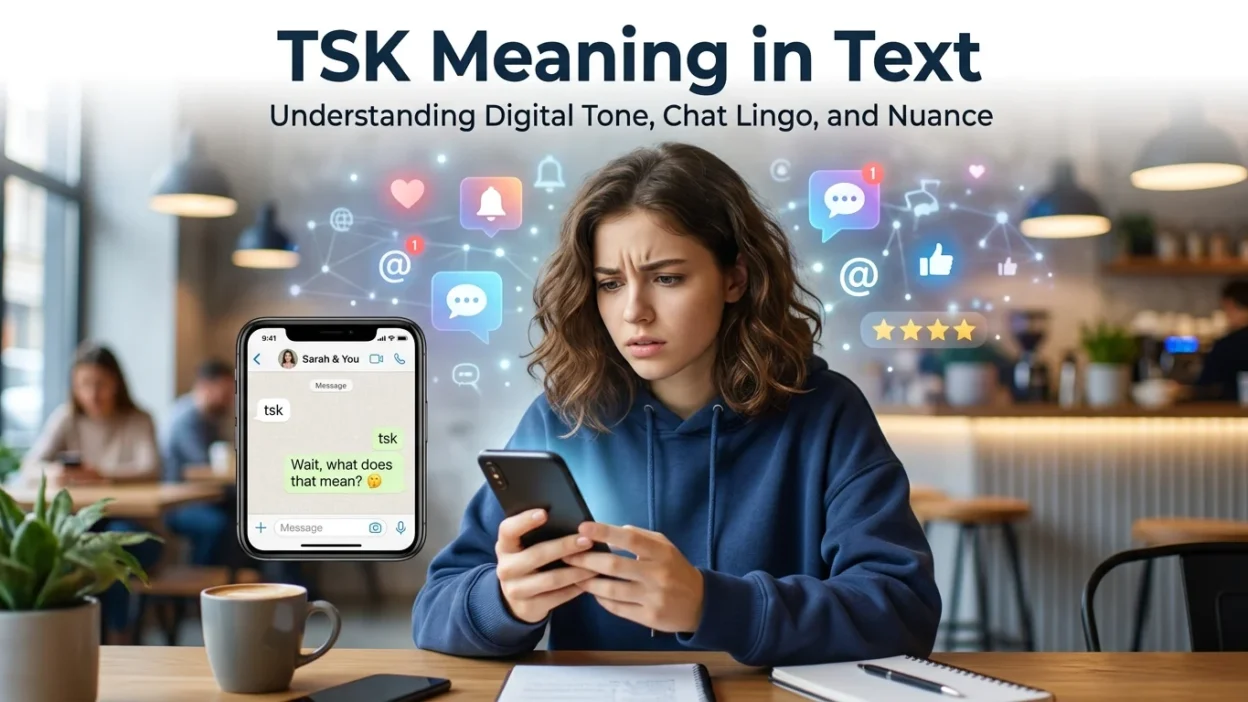
Have you ever been scrolling through messages when someone replied with just “tsk” and nothing else? At first, it can seem confusing. Is it an abbreviation? Is it a typo? Or does it mean something negative?
Many people first come across TSK in text messages, social media comments, gaming chats, or online discussions. It often appears when someone is disappointed, annoyed, or reacting to something they do not approve of. Because texting culture moves fast, small expressions like this can carry a lot of meaning in just a few letters.
If you’ve seen TSK online and want to know exactly what it means, you’re in the right place.
Quick Answer: TSK in text is an expression of disapproval, annoyance, disappointment, or mild criticism, similar to the sound someone makes by clicking their tongue and saying “tsk tsk.”
What Does TSK Mean in Text?
TSK is not really a traditional acronym with a full form. Instead, it represents the sound people make when they click their tongue to show disapproval, disappointment, or annoyance.
In real life, someone might hear bad news and respond with a “tsk tsk” sound. Online, people simply type TSK to express the same feeling.
Plain-English Meaning
When someone writes TSK, they are usually saying:
- “I’m disappointed.”
- “That wasn’t a good idea.”
- “I don’t approve.”
- “You should have known better.”
- “That’s unfortunate.”
The expression is often playful and lighthearted, but it can also be slightly critical depending on the situation.
Why People Use TSK
People use TSK because it quickly shows emotion without needing a long explanation. It’s a simple way to react to something surprising, silly, disappointing, or frustrating.
Example
friend: i forgot my wallet at home again
you: tsk, you do this every week
Summary: TSK is a text expression that shows mild disapproval, disappointment, annoyance, or criticism.
Where Is TSK Commonly Used?
The term TSK appears across many forms of digital communication. Since it mimics a real-life sound, it fits naturally into casual conversations.
Text Messages
Friends often use it when jokingly pointing out mistakes or poor decisions.
Example:
“tsk, i told you that would happen.”
Social Media Comments
People use TSK in comment sections to react to news, opinions, or funny situations.
Example:
“tsk, people never read the instructions.”
Direct Messages (DMs)
In private chats, it can show disappointment without sounding overly harsh.
Example:
“tsk, you forgot my birthday.”
Gaming Chats
Gamers sometimes use TSK after a teammate makes a mistake or misses an opportunity.
Example:
“tsk, we almost had that match.”
Online Forums
Forum users may use TSK when discussing mistakes, poor choices, or controversial topics.
Example:
“tsk, that’s not how the system works.”
Tone of TSK
TSK is generally casual and informal.
It is not considered professional or formal language. Most people use it among friends, online communities, and social media conversations.
Conversation Examples Using TSK
Here are some realistic examples of how people use TSK in modern texting culture.
Example 1
alex: i stayed up until 4am watching videos
sam: tsk, no wonder you’re tired
Example 2
mia: i forgot the meeting was today
josh: tsk, that’s the second time this month
Example 3
player1: i accidentally sold my rare item
player2: tsk, that’s painful
Example 4
emma: i spent my whole paycheck already
kate: tsk, maybe make a budget next time
Example 5
ryan: i never studied for the test
leo: tsk, you’re taking a big risk
Example 6
sara: i clicked the wrong button again
nina: tsk, slow down a little
Example 7
chris: i forgot our plans
ben: tsk, i was waiting for you
Example 8
lily: my phone died during the concert
zoe: tsk, that’s terrible timing
Example 9
mark: i lost the game in the final seconds
dave: tsk, that hurts
Example 10
amy: i ate the last slice of pizza
jake: tsk, now i’m disappointed
When to Use TSK and When Not to Use It
Understanding the right context is important because the meaning depends heavily on tone.
Use TSK When
✅ Reacting to a small mistake
✅ Showing playful disappointment
✅ Responding to an unfortunate situation
✅ Teasing friends in a friendly way
✅ Commenting casually online
Don’t Use TSK When
❌ Writing professional emails
❌ Talking to clients or customers
❌ Communicating in formal business settings
❌ Discussing serious emergencies
❌ Situations where criticism may seem insensitive
Quick Comparison Table
| Context | Example Phrase | Why It Works |
|---|---|---|
| Friend forgot keys | “tsk, not again” | Casual and playful |
| Gaming mistake | “tsk, we almost won” | Fits informal chat |
| Social media comment | “tsk, that’s disappointing” | Expresses reaction quickly |
| Job application email | “tsk, please review my resume” | Too informal |
| Business meeting | “tsk, that report is late” | Unprofessional tone |
Similar Slang Words and Alternatives
If you understand TSK Meaning in Text, you may also encounter similar social media slang and chat shorthand expressions.
| Term | Meaning | Best Used When |
|---|---|---|
| Sigh | Expresses disappointment or frustration | Mild annoyance |
| SMH | Shaking My Head | Disapproval or disbelief |
| Oof | Reaction to something unfortunate | Sympathy or awkward moments |
| Bruh | Surprise, disappointment, or disbelief | Casual conversations |
| Yikes | Reacting to something uncomfortable | Awkward situations |
| Wow | Surprise or disbelief | Many contexts |
| Seriously? | Questioning someone’s actions | Mild criticism |
| Come on | Encouraging or criticizing lightly | Friendly conversations |
SMH vs TSK
Both show disapproval, but SMH is often stronger and more direct. TSK usually feels lighter and more playful.
Oof vs TSK
Oof shows sympathy for someone’s bad situation. TSK often includes a hint of criticism or disappointment.
Yikes vs TSK
Yikes focuses on shock or discomfort, while TSK focuses more on disapproval.
Why TSK Remains Popular in Texting Culture
Modern communication values speed and emotion. People want quick ways to react without typing long messages.
That’s why expressions like TSK, SMH, LOL, and OOF remain common across social media and online chats.
TSK works especially well because it copies a real-life reaction. Even when typed, readers can almost hear the tongue-clicking sound behind the message.
It adds personality to conversations and helps people express feelings with very little effort.
Frequently Asked Questions (FAQ)
What does TSK mean in text messages?
TSK is an expression of disapproval, disappointment, annoyance, or mild criticism. It represents the tongue-clicking sound people make when reacting negatively to something.
Is TSK an acronym?
No. TSK is generally not considered an acronym with a full form. It is a written version of a sound effect.
Is TSK rude?
Usually not. Most people use it playfully or lightly. However, depending on the situation and tone, it can sound critical or judgmental.
Who uses TSK the most?
People of many age groups use it, especially those familiar with texting culture, social media slang, gaming chats, and online communities.
Can TSK be used on social media?
Yes. TSK is commonly used in comments, replies, posts, and direct messages across social media platforms.
Is TSK formal or informal?
TSK is highly informal. It works best in casual conversations and online chats rather than professional communication.
Can TSK have different meanings?
Its core meaning stays mostly the same, but the tone can vary from playful teasing to genuine disappointment depending on context.
Final Thought
Understanding TSK Meaning in Text helps you better navigate modern digital communication. Unlike many texting abbreviations, TSK is not a shortened phrase. Instead, it represents a real-life sound people make to show disapproval, disappointment, annoyance, or mild criticism.
Whether you see it in text messages, social media comments, gaming chats, or online forums, the meaning is usually straightforward. It’s a quick, informal way to react to a mistake, poor decision, or unfortunate situation. Knowing when and how to use TSK can help you understand conversations more naturally and participate confidently in today’s fast-moving texting culture.