The first time I saw the word “contingent”, it wasn’t in a textbook. It was in a group chat. Someone wrote, “my plans are contingent on the weather.” I paused. Was that slang? A typo? Some new texting abbreviation I didn’t know about?
If you’ve seen this word in a message, email, comment, or even on social media, you might have wondered the same thing. It sounds formal, but people use it in everyday chats too. So what does it actually mean?
Let’s break it down in the simplest way possible.
Quick Answer
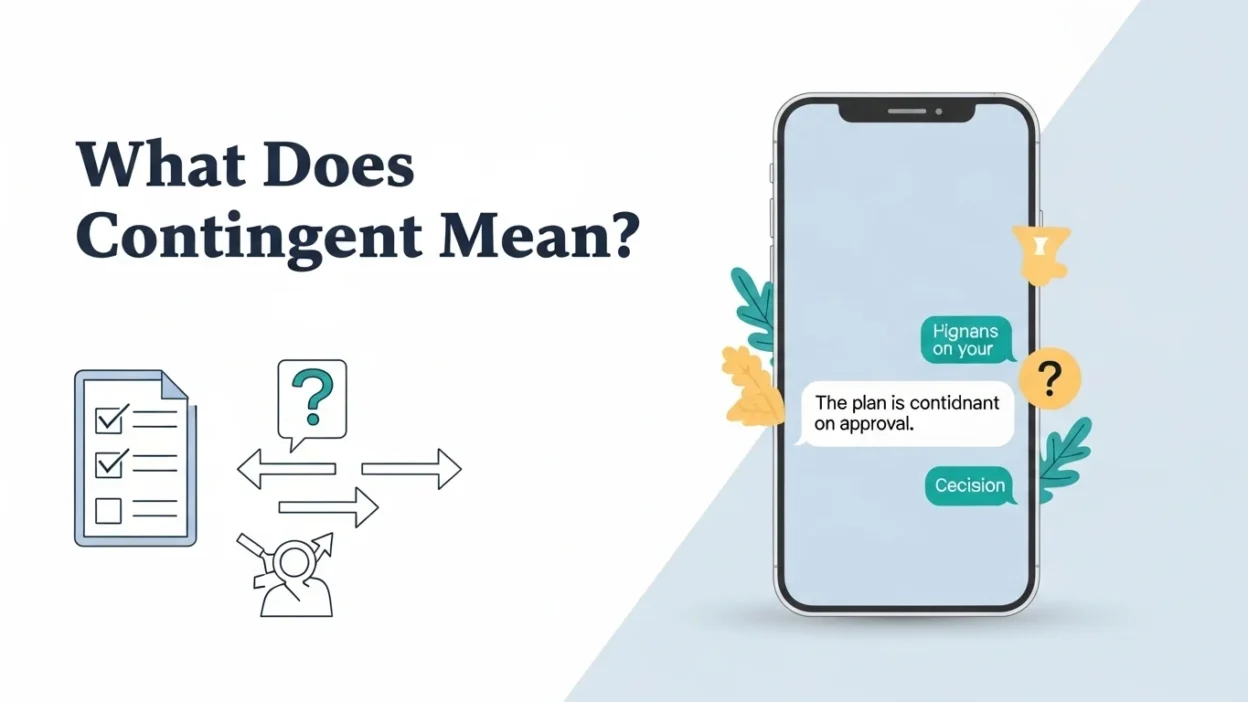
Contingent means something depends on something else happening first.
What Does Contingent Mean in Text?
Unlike many viral slang terms in texting culture, contingent is not an abbreviation. It does not have a short form or hidden full form. It is a regular English word that people use in both formal and informal chat.
Plain-English Meaning
When something is contingent, it means it will only happen if something else happens first.
In simple words:
👉 It depends.
For example:
“My trip is contingent on getting time off work.”
This means the trip will only happen if the person gets leave approved.
Why Do People Use It?
People use contingent when they want to sound clear and specific. Instead of saying “maybe” or “it depends,” they explain exactly what the decision depends on.
It’s common in:
- Work emails
- Business messages
- School discussions
- Online forums
- Even casual texting
One Short Example Sentence
“the deal is contingent on payment.”
In short: Contingent means something will happen only if a certain condition is met.
Where Is “Contingent” Commonly Used?
The word contingent is mostly neutral or slightly formal in tone. It is not slang like “brb” or “lol,” but you may still see it in modern online chat.
Here’s where it appears most:
1. Work & Professional Messages
Common in emails, contracts, and LinkedIn messages.
Tone: Formal to neutral
Example:
“the offer is contingent on background verification.”
2. Real Estate
Very common when buying houses.
Tone: Formal
Example:
“the sale is contingent on inspection.”
3. Text Messages
Used when explaining plans.
Tone: Neutral
Example:
“i’ll come, but it’s contingent on my schedule.”
4. Social Media Comments
Seen in discussions or serious debates.
Tone: Neutral
5. Online Forums & Gaming Chats
Less common, but sometimes used in strategy talk.
Tone: Neutral
It is not slang, but it fits into modern texting culture because people often mix formal words into informal chat.
Real Conversation Examples (Modern Chat Style)
Here are realistic lowercase chat examples you might see online:
- “yeah i’m coming, but it’s contingent on my ride showing up.”
- “the project is contingent on client approval.”
- “i’ll buy it, contingent on the price staying the same.”
- “our trip is contingent on the weather tbh.”
- “promotion is contingent on performance this quarter.”
- “i’m down to join, but that’s contingent on timing.”
- “deal is contingent on contract signing.”
- “movie night is contingent on everyone being free.”
- “my answer is contingent on what she says.”
Notice how natural it sounds even in informal chat.
When to Use and When NOT to Use “Contingent”
Even though the word is simple, it doesn’t fit everywhere.
✅ Use It When:
- You want to explain a condition clearly
- You are discussing plans or agreements
- You are writing something professional
- You want to sound precise
❌ Don’t Use It When:
- You’re joking casually
- You want very simple language
- The audience may not understand formal words
- A simpler word like “if” works better
Quick Comparison Table
| Context | Example Phrase | Why It Works / Doesn’t Work |
|---|---|---|
| Work email | “the bonus is contingent on targets.” | Works – professional tone |
| Casual joke | “pizza is contingent on vibes lol” | Feels awkward |
| Real estate | “sale is contingent on inspection.” | Very common usage |
| Kids chat | “sleepover is contingent on homework.” | Might sound too formal |
Sometimes, using simpler words like “depends on” makes more sense.
Similar Words or Alternatives
If you don’t want to use contingent, here are good alternatives:
| Word / Phrase | Meaning | When to Use |
|---|---|---|
| Depends on | Based on something | Casual chat |
| Conditional | Has conditions | Formal writing |
| If | Only happens when | Very simple speech |
| Subject to | Controlled by conditions | Legal or formal |
| Pending | Waiting for something | Professional updates |
| Based on | Influenced by | Neutral tone |
Quick Examples:
- “it depends on the weather.” (casual)
- “approval is pending.” (professional)
- “subject to review.” (formal)
All of these carry a similar idea to contingent — something must happen first.
Why Is “Contingent” Important in Modern Communication?
In texting culture, people often shorten words. But sometimes, using a clear word like contingent helps avoid confusion.
Instead of saying:
“maybe.”
You say:
“it’s contingent on my exam schedule.”
That sounds clearer and more responsible.
In business chats, contracts, and serious conversations, this word prevents misunderstandings. It clearly shows that nothing is final yet.
Frequently Asked Questions (FAQ)
1. Is contingent slang?
No. Contingent is a standard English word, not a texting abbreviation or slang term.
2. Does contingent have a full form?
No. It is not an acronym. It’s just a normal vocabulary word.
3. Is contingent formal or informal?
It is mostly neutral to formal. It works well in professional settings but can also be used in normal texting.
4. Can teenagers use the word contingent?
Yes, but it may sound a little formal in very casual chats. Teens usually prefer simpler words like “depends.”
5. What is the difference between contingent and depends?
They mean almost the same thing.
“Contingent” sounds more formal and specific.
“Depends” sounds casual and simple.
6. Is contingent used on social media?
Yes, especially in serious discussions, finance topics, contracts, or planning conversations.
7. Can contingent mean a group of people?
Yes! In another meaning, a contingent can also mean a group of people representing something.
Example: “a small contingent of fans attended.”
But in texting and chat meaning, it usually refers to conditions.
Final Thought
So, what does contingent mean?
It simply means something depends on something else happening first.
It’s not an abbreviation. It’s just a clear word that helps explain conditions. You’ll see it in work emails, contracts, school talks, and even everyday texting when people want to be precise.
Understanding words like contingent helps you communicate better in both formal and informal chat. In modern digital communication, clarity matters — and this word delivers exactly that.

Michel Clark is an emerging author and content creator behind Ribacks.com, where he writes insightful articles on [your niche/topics e.g., lifestyle, tech, personal growth]. Known for fresh perspectives and engaging storytelling, Clark is building a growing readership with thoughtful writing and meaningful connections in the online community.