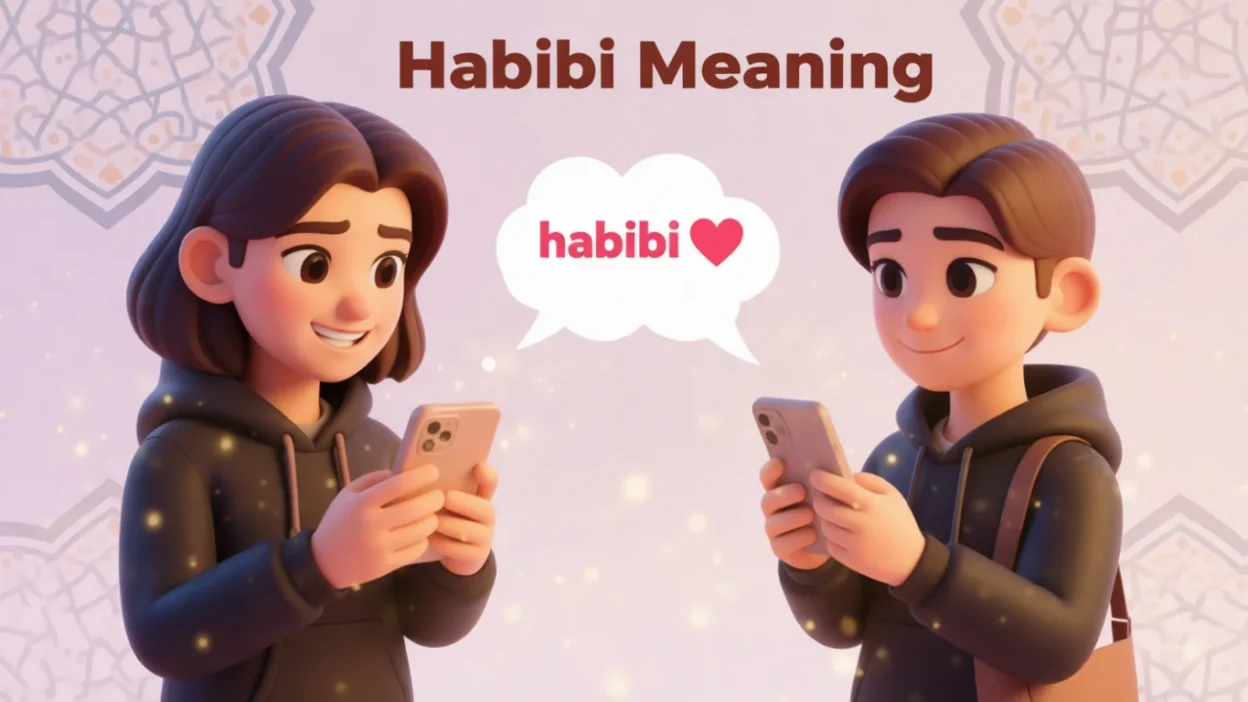
You’re scrolling through TikTok, watching a reel, or texting a friend when someone drops the word “habibi.”
Maybe it’s in a comment like “come here, habibi” or a sweet message that feels warm and affectionate. You pause and think, “That sounds nice… but what does habibi actually mean?”
If you’ve seen habibi used online and felt curious, you’re not alone. It’s a beautiful word that’s traveled from everyday language into global internet slang.
Let’s explore what it really means.
Quick Answer:
Habibi is an Arabic word that means “my love” or “my dear.” It’s a warm, affectionate way to address someone you care about.
🧠 What Does Habibi Mean in Text?
Habibi (حبيبي) literally means “my beloved” in Arabic.
In texting and social media, it’s used as a term of endearment, similar to babe, dear, or sweetheart.
It can be:
- Romantic ❤️
- Friendly 😊
- Playful 😄
Example sentence:
“good morning, habibi ☀️❤️”
In short:
Habibi = my love / my dear = affectionate nickname
💡 For females, you may also see “habibti,” but online many people just use habibi for everyone.
📱 Where Is Habibi Commonly Used?
You’ll see habibi in both cultural and casual online spaces 👇
Common platforms:
- 💬 Text messages
- 🎵 TikTok & reels
- 📸 Instagram captions
- 🐦 X (Twitter)
- ❤️ Couple chats
Tone & formality:
- ❌ Not formal
- ❤️ Loving & warm
- 😊 Friendly & playful
- 📱 Social-media friendly
👉 Habibi fits best in personal, affectionate conversations.
💬 Examples of Habibi in Conversation
Here are natural chat-style examples 👇
Example 1 (romantic):
A: “i miss you”
B: “miss you too, habibi ❤️”
Example 2 (friendly):
A: “thanks for helping me”
B: “anytime, habibi 😊”
Example 3 (playful):
A: “you ate without me?”
B: “sorry habibi 😅”
Example 4 (comment):
A: “you look great today”
B: “thank you, habibi 🥰”
Example 5 (joking):
A: “bro you’re late again”
B: “forgive me, habibi 😂”
🕓 When to Use and When Not to Use Habibi
✅ When to Use Habibi
- With a partner or crush
- Close friends who like affectionate terms
- Playful, warm chats
- Cultural or friendly interactions
❌ When NOT to Use Habibi
- Professional/work conversations
- With strangers who might be uncomfortable
- Formal writing
- Serious or tense situations
Context Comparison Table
| Context | Example Phrase | Why It Works |
|---|---|---|
| Partner Chat | “love you, habibi ❤️” | Romantic & warm |
| Friend Chat | “thanks, habibi 😊” | Friendly |
| Work Chat | “Thank you for your support.” | Professional |
| “Dear Sir/Madam,” | Formal & appropriate |
🔄 Similar Slang Words or Alternatives
| Slang/Word | Meaning | When to Use |
|---|---|---|
| Bae | Loved one | Casual |
| Boo | Partner | Romantic |
| Pookie | Cute nickname | Playful |
| Hun | Honey | Friendly |
| Dear | Loved person | Polite |
| Love | Term of endearment | Warm tone |
❓ FAQs About Habibi
Is habibi romantic?
Yes, it often is, but it can also be friendly.
Can habibi be used for friends?
Yes, especially in Middle Eastern cultures and online.
Is habibi only for males?
Traditionally habibi is masculine and habibti is feminine, but online people use habibi for anyone.
Is habibi rude?
No, it’s affectionate — but only use it where it’s appropriate.
Is habibi Gen Z slang?
It’s an old word, but Gen Z uses it widely online.
🧠 Final Thoughts
Habibi is a beautiful Arabic word that means “my love” or “my dear,” and in modern texting it’s used as a warm, affectionate nickname for someone special.
Whether you’re talking to a partner, a close friend, or using it playfully online, it carries a sense of closeness and care.