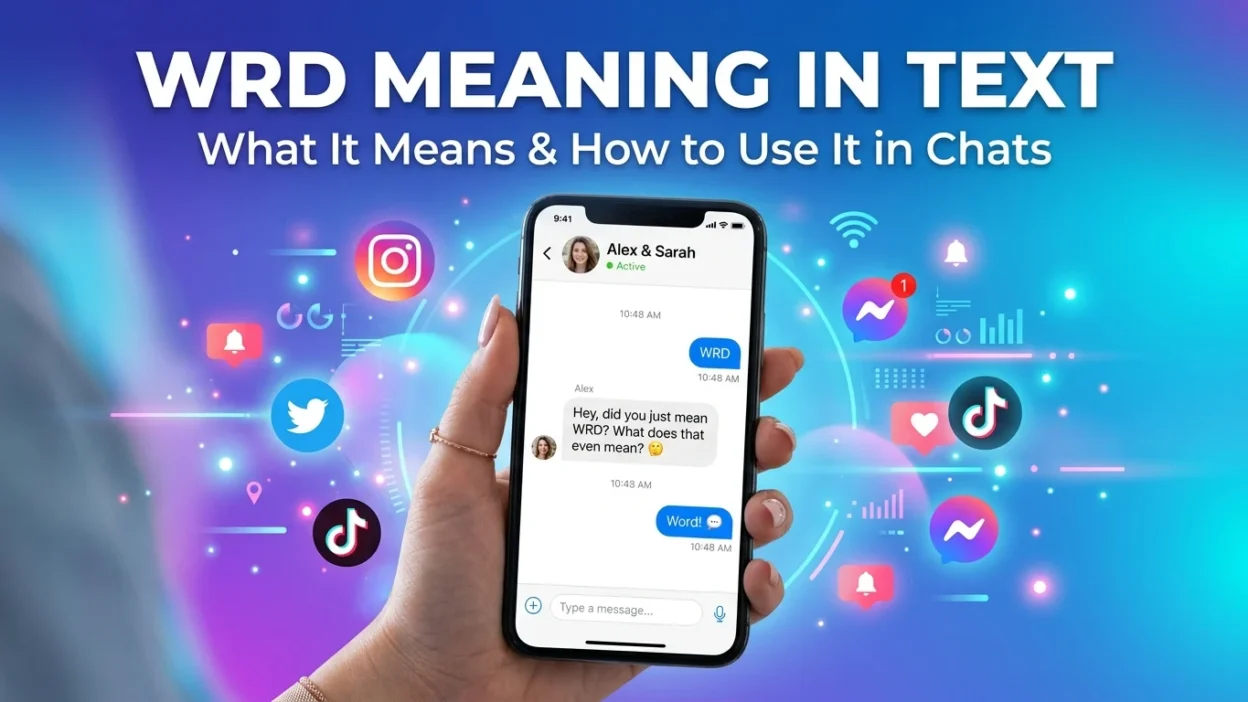
Have you ever received a message that simply said “wrd” and wondered what it meant? Maybe a friend replied with it in a group chat, someone commented it under a social media post, or you spotted it in a gaming conversation. The first time many people see WRD,
it can look like a typo or a shortened version of another word. But in today’s texting culture, abbreviations and chat shorthand are everywhere, and WRD is one of those quick expressions people use to keep conversations fast and casual. If you’re curious about the WRD meaning in text, this guide explains everything you need to know.
Quick Answer: WRD means “word,” and it is commonly used to show agreement, understanding, approval, or confirmation in a text conversation.
What Does WRD Mean in Text?
The WRD meaning in text is simply “word.” People remove the vowel to type faster, turning “word” into “wrd.”
In texting and online chat, word is often used as a response that means:
- I agree
- That’s true
- I understand
- Exactly
- Good point
- Okay
Instead of typing a longer response, someone may simply send “wrd” to show they are on the same page.
Why Do People Use WRD?
People use WRD because it is:
- Quick to type
- Easy to understand
- Common in casual conversations
- Useful for showing agreement without writing a full sentence
Example
friend: that movie was way better than i expected
you: wrd
In this example, wrd means “I agree” or “that’s true.”
Summary: WRD is a texting abbreviation for “word,” used to express agreement, understanding, or approval in casual conversations.
Where Is WRD Commonly Used?
The term WRD appears in many types of online communication. Because it is short and informal, it fits naturally into fast-moving digital conversations.
Text Messages
Friends often use WRD in personal chats when they agree with something that was said.
Social Media Comments
People leave wrd in comment sections when they support an opinion or statement.
Direct Messages (DMs)
On platforms like Instagram, TikTok, Snapchat, and X, users frequently send WRD as a quick acknowledgment.
Gaming Chats
Gamers use WRD to agree with teammates or react to strategies and discussions.
Online Forums
Discussion boards and community forums sometimes include WRD when users support another person’s point.
Group Chats
In busy group chats, WRD is a simple way to show agreement without sending a long message.
Tone of WRD
The tone is generally:
- Casual
- Informal
- Friendly
- Relaxed
It is not considered professional or formal language.
Conversation Examples Using WRD
Here are some realistic examples showing how people use WRD in modern texting culture.
Example 1
alex: that new update is actually pretty good
jordan: wrd
Example 2
sam: we should leave early to avoid traffic
mia: wrd, that’s smart
Example 3
liam: this game is harder than i thought
noah: wrd lol
Example 4
emma: summer break can’t come soon enough
ava: wrd
Example 5
jake: pizza sounds good tonight
ethan: wrd, let’s order some
Example 6
olivia: i need more sleep
chloe: wrd 😂
Example 7
ryan: that was the best episode so far
lucas: wrd
Example 8
sophia: studying with music helps me focus
grace: wrd, same here
Example 9
mason: weekends always go by too fast
aiden: wrd fr
Example 10
ella: that concert was amazing
zoe: wrd, i’d go again
When to Use WRD
Knowing when to use WRD helps you sound natural in online conversations.
Use WRD When:
✅ You agree with someone’s opinion
✅ You want to confirm what was said
✅ You understand the message
✅ You’re chatting with friends
✅ You’re participating in casual social media conversations
✅ You want a short response
Don’t Use WRD When:
❌ Writing professional emails
❌ Talking to clients or customers
❌ Creating academic assignments
❌ Communicating in formal business settings
❌ Situations requiring clear and complete explanations
Quick Comparison Table
| Context | Example Phrase | Why It Works |
|---|---|---|
| Friend texting | “wrd, that’s true” | Casual agreement |
| Gaming chat | “wrd, good strategy” | Quick confirmation |
| Group chat | “wrd” | Shows support quickly |
| School essay | “wrd” | Doesn’t work because it’s too informal |
| Business email | “wrd” | Unprofessional and unclear |
| Job application | “wrd” | Formal language is expected |
Similar Slang Words and Alternatives
Many social media slang terms have a similar meaning to WRD. Here are some common alternatives.
| Slang | Meaning | When to Use |
|---|---|---|
| fr | for real | When something is true |
| facts | that’s true | Strong agreement |
| exactly | complete agreement | Casual or semi-casual chats |
| bet | okay, agreed | Making plans or confirming |
| true | correct statement | General agreement |
| same | I feel the same way | Shared opinions |
| yup | yes | Simple confirmation |
| valid | good point | Social media discussions |
| 100% | complete agreement | Strong support |
WRD vs Facts
Both show agreement, but facts usually expresses stronger support.
example: that’s the best restaurant in town
response: facts
WRD vs Bet
Bet often means “okay” or “deal,” while wrd usually means “I agree.”
WRD vs Same
Same is used when you share the exact feeling or experience.
Why WRD Is Popular in Texting Culture
Texting culture values speed and simplicity. People often shorten words to save time and make conversations flow faster.
WRD fits perfectly into this style because it:
- Uses fewer characters
- Keeps chats moving
- Feels natural among younger users
- Works across many platforms
- Quickly communicates agreement
As online communication evolves, abbreviations like WRD continue to become part of everyday digital language.
Many social media users, gamers, and frequent texters understand WRD immediately, making it a useful piece of internet slang.
Is WRD Always Positive?
Most of the time, yes.
WRD usually shows:
- Agreement
- Support
- Understanding
- Approval
However, like many slang terms, tone depends on context.
For example:
friend: i failed that test
response: wrd
Here, WRD may simply mean “I understand” rather than approval.
This is why context matters when interpreting online chat meaning.
FAQ About WRD Meaning in Text
What does WRD stand for in texting?
WRD is a shortened spelling of “word.” It is used to express agreement, understanding, or confirmation.
Is WRD the same as saying “I agree”?
Yes. In many conversations, WRD functions as a quick way to say “I agree” or “that’s true.”
Is WRD considered slang?
Yes. WRD is a form of internet slang and chat shorthand commonly used in informal conversations.
Who uses WRD the most?
WRD is popular among teens, young adults, gamers, and active social media users, though anyone can use it in casual chats.
Can WRD be used on social media?
Absolutely. WRD frequently appears in comments, captions, replies, DMs, and online discussions.
Is WRD appropriate for work emails?
No. WRD is informal and generally unsuitable for professional communication.
Can WRD mean something different?
In most texting situations, WRD simply means “word.” The exact meaning may vary slightly based on context, but it usually expresses agreement or understanding.
Final Thought
Understanding the WRD meaning in text helps you keep up with modern texting culture and online communication. WRD is simply a shortened form of “word,” used to show agreement, understanding, approval, or confirmation. Whether you’re chatting with friends, commenting on social media, participating in gaming discussions, or messaging in a group chat, WRD is a quick and easy way to respond. While it’s perfect for casual conversations, it’s best avoided in formal settings. Knowing how and when to use WRD can help you communicate more naturally in today’s fast-paced digital world.