Have you ever been helping a child with reading homework or scrolling through an educational post online when you suddenly came across the term “digraph”? At first, it might sound like a complicated grammar word or a technical language rule. Many people see it in school lessons, phonics videos, or reading apps and wonder what it actually means.
The good news is that a digraph is much easier to understand than it sounds. Once you learn what it is, you’ll start noticing digraphs everywhere—in everyday words, books, and even social media content about learning and literacy.
Quick Answer: A digraph is a pair of two letters that work together to make one single sound.
What Is the Digraph Meaning?
The digraph meaning is simple: it refers to two letters that combine to create one sound in a word.
The word comes from:
- Di = two
- Graph = written letters or symbols
So, a digraph literally means “two letters written together.”
In English, certain letter pairs join forces to make a unique sound that is different from the sound each letter would make alone.
Common Digraph Examples
| Digraph | Sound Example | Word |
|---|---|---|
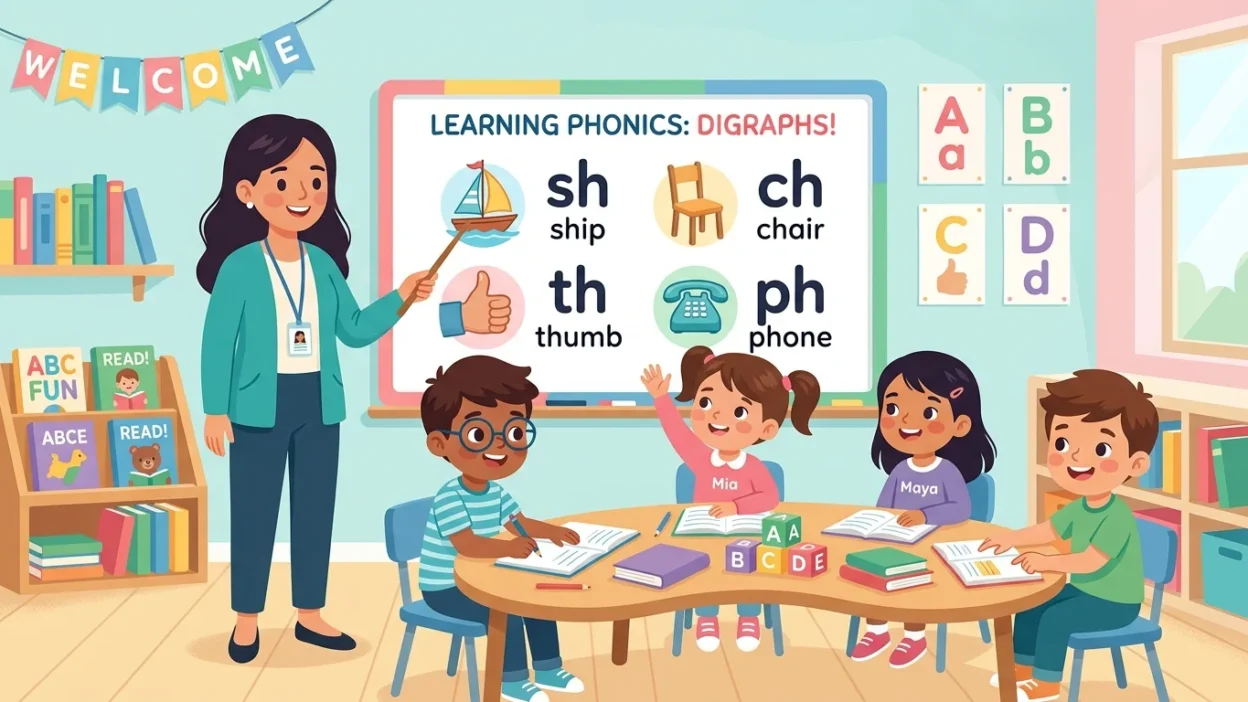
| ch | /ch/ | chair |
| sh | /sh/ | ship |
| th | /th/ | think |
| ph | /f/ | phone |
| wh | /w/ | whale |
| ck | /k/ | duck |
Why Do People Use the Term Digraph?
The term is commonly used in:
- Phonics lessons
- Reading instruction
- Language learning
- Elementary education
- Literacy programs
Teachers use it to help learners understand how letter combinations create sounds.
Example Sentence
“The word ship contains the digraph sh, which makes one sound.”
Summary: A digraph is two letters that work together to produce a single sound in a word.
Where Is the Term Digraph Commonly Used?
Unlike many terms found in texting culture or social media slang, digraph is an educational and language-related term.
You may see it in:
School Classrooms
Teachers introduce digraphs when students begin learning phonics and reading.
Reading Apps
Many literacy apps include lessons on digraph sounds.
Educational Social Media Posts
Parents, tutors, and teachers often share learning tips about digraphs on social platforms.
Online Learning Platforms
Websites that teach English often include digraph activities and worksheets.
Language Forums
People discussing pronunciation or spelling rules may talk about digraphs.
Tone of the Word
| Context | Tone |
|---|---|
| Classroom | Educational |
| Reading Lesson | Neutral |
| Language Learning | Formal |
| Parent Discussions | Casual |
| Educational Social Media | Informal to Neutral |
The term itself is neutral and educational, not slang.
Real-Life Conversation Examples
Below are realistic examples showing how people naturally use the word digraph in conversations.
Example 1
teacher: can anyone find the digraph in the word “shop”?
student: it’s “sh”
Example 2
parent: why is my child learning digraphs?
teacher: they help children understand letter sounds when reading.
Example 3
student: what’s a digraph?
friend: it’s when two letters make one sound together.
Example 4
mom: we’re practicing digraph words tonight.
dad: let’s start with “ch” and “sh”.
Example 5
tutor: can you spot the digraph in “think”?
student: yes, it’s “th”.
Example 6
teacher: today’s lesson is all about digraph sounds.
class: yay!
Example 7
parent: my son finally understands digraphs.
friend: that’s great progress.
Example 8
student: is “ph” a digraph?
teacher: yes, because it makes the /f/ sound.
Example 9
friend: i’m studying phonics tonight.
friend 2: don’t forget to review digraphs.
When to Use and When Not to Use the Term Digraph
Understanding the correct context is important.
Use Digraph When:
✅ Talking about reading or phonics
✅ Teaching spelling patterns
✅ Explaining pronunciation
✅ Discussing language learning
✅ Helping children learn to read
Don’t Use Digraph When:
❌ Referring to texting abbreviations
❌ Explaining internet slang
❌ Talking about social media shorthand
❌ Discussing emojis or chat abbreviations
❌ Referring to acronyms like LOL or BRB
Quick Comparison Table
| Context | Example Phrase | Works? | Why |
|---|---|---|---|
| Phonics lesson | “sh is a digraph” | ✅ Yes | Two letters make one sound |
| Reading class | “find the digraph” | ✅ Yes | Educational usage |
| Text slang discussion | “lol is a digraph” | ❌ No | LOL is an acronym |
| Social media abbreviation | “brb is a digraph” | ❌ No | BRB is shorthand, not a sound pattern |
| Pronunciation lesson | “th is a digraph” | ✅ Yes | Correct language term |
Types of Digraphs
Not all digraphs are exactly the same.
Consonant Digraphs
These involve two consonants making one sound.
Examples:
- sh
- ch
- th
- wh
- ck
Words:
- ship
- chair
- think
- whale
- duck
Vowel Digraphs
These involve two vowels working together.
Examples:
- ai
- ea
- oa
- ee
- ay
Words:
- rain
- bread
- boat
- tree
- play
Learning both types helps improve reading and spelling skills.
Similar Language Terms and Alternatives
People sometimes confuse digraphs with other language concepts. Here are some related terms.
| Term | Meaning | When to Use |
|---|---|---|
| Digraph | Two letters making one sound | Phonics and reading |
| Blend | Two sounds heard together | Reading instruction |
| Trigraph | Three letters making one sound | Advanced phonics |
| Phonics | Sound-letter relationships | Reading education |
| Grapheme | Written representation of a sound | Linguistics |
| Syllable | A spoken word part | Pronunciation lessons |
| Phoneme | Smallest speech sound | Language learning |
Digraph vs Blend
A common confusion is between a digraph and a blend.
Digraph: one sound
- ship → sh
Blend: both sounds are heard
- stop → st
This difference is important in phonics instruction.
Why Digraphs Matter
Digraphs play a major role in learning to read.
Improve Reading Skills
Recognizing digraphs helps readers decode words more quickly.
Improve Spelling
Children learn which letter combinations create certain sounds.
Build Pronunciation Skills
Digraphs help learners pronounce unfamiliar words correctly.
Support Language Learning
English learners often study digraphs early because they appear in many common words.
Examples include:
- this
- think
- chair
- ship
- phone
- whale
Knowing these patterns makes reading easier and more enjoyable.
Common Digraph Words
Here are some everyday words that contain digraphs.
SH Words
- ship
- shop
- fish
- wish
- shell
CH Words
- chair
- child
- cheese
- chicken
- lunch
TH Words
- think
- thank
- three
- thumb
- bath
PH Words
- phone
- photo
- phrase
- pharmacy
- dolphin
WH Words
- whale
- what
- where
- when
- wheel
These examples show how common digraphs are in everyday English.
Frequently Asked Questions (FAQ)
What does digraph mean?
A digraph is two letters that work together to create one sound.
Is a digraph a texting abbreviation?
No. A digraph is a language and phonics term, not a texting abbreviation or social media slang.
What is the difference between a digraph and a blend?
A digraph creates one sound, while a blend keeps both individual sounds.
Are digraphs only used by children?
No. Adults, teachers, tutors, linguists, and language learners all use the concept of digraphs.
What are the most common digraphs?
Some common examples are:
- sh
- ch
- th
- ph
- wh
- ck
Is “ph” considered a digraph?
Yes. The letters ph work together to create the /f/ sound.
Why are digraphs important in reading?
They help readers understand how letters combine to form sounds, improving reading, spelling, and pronunciation skills.
Final Thought
Understanding the digraph meaning is an important step in learning how English sounds and spelling work. A digraph is simply two letters that join together to make one sound, such as sh, ch, th, or ph. While it is not part of texting culture, chat shorthand, or social media slang, it is a key concept in phonics, literacy, and language education. Whether you’re a parent, teacher, student, or English learner, recognizing digraphs can make reading, spelling, and pronunciation much easier and more effective.