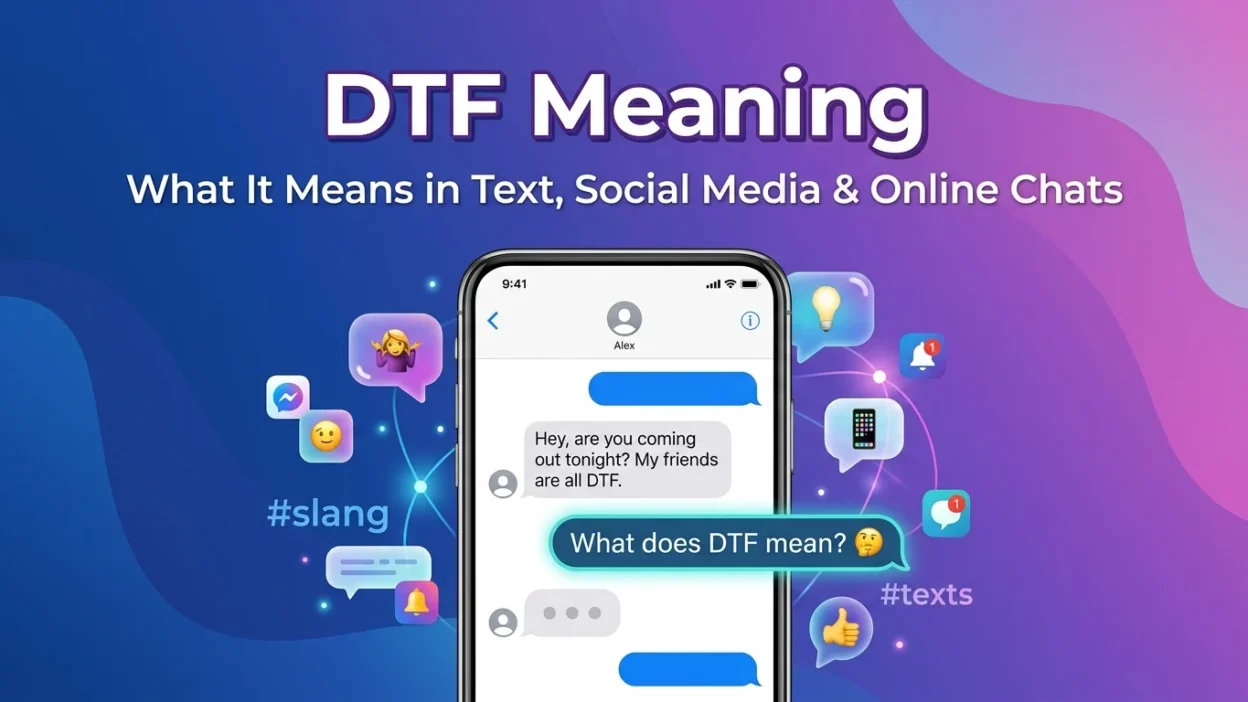
Have you ever been scrolling through messages, reading comments, or chatting with friends when you suddenly saw the term DTF and wondered what it meant? You’re not alone. Many people first come across this slang in a text message, social media post, dating app conversation, or online discussion.
At first glance, it may look like just another random abbreviation. But once you know its meaning, you’ll start noticing it everywhere online. Understanding modern texting culture can help you avoid confusion and communicate more confidently in digital conversations. In this guide, we’ll explain the DTF meaning, where it’s used, when to use it, and what to watch out for.
Quick Answer
DTF means “Down To F*,” a slang term used to ask or indicate whether someone is interested in having a sexual encounter.**
What Does DTF Mean in Text?
The abbreviation DTF stands for “Down To F*.”** It is a popular piece of internet slang and texting shorthand that refers to being willing or interested in a sexual relationship or encounter.
In plain English, when someone says they are “DTF,” they are saying they are open to hooking up or having sexual activity.
People use this texting abbreviation because it is short, direct, and widely understood in online culture. It often appears in casual conversations, dating apps, social media discussions, and memes.
Example
person 1: “are they interested in dating?”
person 2: “not sure, but they seem dtf.”
In this example, the speaker suggests the person may be interested in a physical relationship.
Summary: DTF is a slang term that means someone is willing or interested in a sexual encounter.
Where Is DTF Commonly Used?
The term DTF is most commonly used in informal digital communication. Because it has a sexual meaning, it is rarely appropriate in professional or formal settings.
Text Messages
Friends or romantic interests may use DTF in private chats when discussing relationships, dating, or attraction.
Social Media
The term often appears in comments, memes, captions, and posts on platforms such as:
- TikTok
- Snapchat
- X
Dating Apps
DTF is especially common on dating platforms where users discuss dating preferences or relationship goals.
Online Forums
Internet communities and discussion boards sometimes use the term when talking about dating, relationships, or hookup culture.
Gaming Chats
While less common, players may occasionally use the abbreviation jokingly in casual gaming conversations.
Tone of DTF
| Setting | Tone |
|---|---|
| Texting friends | Casual |
| Dating apps | Informal |
| Social media | Casual |
| Gaming chats | Informal |
| Workplace chats | Not appropriate |
| Business emails | Not appropriate |
Overall, DTF is a casual and informal slang term.
Realistic Conversation Examples
Here are some natural examples showing how DTF may appear in modern texting culture.
Example 1
alex: u think they’re looking for a relationship?
sam: honestly, they seem more dtf than serious
Example 2
jake: what’s their dating profile like?
emma: pretty clear they’re dtf
Example 3
liam: did they message you back?
zoe: yeah, and they’re definitely acting dtf
Example 4
max: what does dtf even mean?
ryan: it means someone’s down for a hookup
Example 5
maya: why is everyone using dtf in the comments?
lena: it’s just internet slang
Example 6
josh: are they interested?
kate: maybe, but i can’t tell if they’re joking or dtf
Example 7
noah: that meme is wild
ethan: the dtf joke made it funny
Example 8
olivia: did you understand that post?
ava: yeah, it was basically asking who’s dtf
Example 9
ben: dating apps are confusing
chris: you’ll see dtf a lot on there
When to Use DTF (and When Not to Use It)
Because DTF has a direct sexual meaning, context matters.
Use DTF When
✅ Talking with close friends who understand internet slang
✅ Discussing dating culture
✅ Referring to online dating conversations
✅ Understanding memes and social media posts
✅ Talking about relationship preferences in casual settings
Avoid Using DTF When
❌ Speaking with coworkers
❌ Writing professional emails
❌ Communicating with teachers or supervisors
❌ Talking with people who may not know the slang
❌ Participating in formal discussions
Quick Comparison Table
| Context | Example Phrase | Why It Works |
|---|---|---|
| Casual friend chat | “they seem dtf” | Informal and understood by friends |
| Dating app discussion | “their profile says they’re dtf” | Relevant to dating conversations |
| Work meeting | “our client is dtf” | Inappropriate and unprofessional |
| Business email | “are you dtf?” | Wrong context and potentially offensive |
| Social media meme | “everyone in the comments is saying dtf” | Common internet slang usage |
Similar Slang Words and Alternatives
Several other slang terms appear in online chats and texting culture alongside DTF.
| Term | Meaning | When to Use |
|---|---|---|
| Hookup | Casual romantic or sexual encounter | General dating discussions |
| FWB | Friends With Benefits | Ongoing casual relationship |
| Netflix and Chill | Often implies romantic or sexual interest | Casual joking conversations |
| Smash | Slang for having sex | Informal online chats |
| Link Up | Meet in person | Casual texting |
| Situationship | Undefined romantic relationship | Relationship discussions |
| Talking | Getting to know someone romantically | Early dating stage |
| Crush | Someone you like | General social conversations |
DTF vs FWB
DTF usually refers to willingness for a sexual encounter.
FWB (Friends With Benefits) describes an ongoing friendship that includes a physical relationship.
DTF vs Hookup
A hookup is the actual encounter, while DTF describes being willing or interested in that encounter.
Why Is DTF So Popular Online?
Internet communication moves quickly. People like abbreviations because they save time and fit naturally into chats, comments, and messages.
DTF became popular because:
- It’s short and easy to type.
- Many people recognize it instantly.
- It appears in movies, memes, and social media.
- Dating culture often uses abbreviations.
- It fits modern texting habits.
Like many forms of chat shorthand, DTF spread rapidly through online communities and social platforms.
Frequently Asked Questions
What does DTF mean in texting?
DTF stands for “Down To F*”** and usually means someone is willing or interested in a sexual encounter.
Is DTF rude?
Not necessarily, but it can be considered bold or explicit. The appropriateness depends on the audience and situation.
Is DTF only used on dating apps?
No. While common on dating apps, it also appears in text messages, social media posts, memes, and online discussions.
Do younger people still use DTF?
Yes. Many younger internet users recognize the term, although newer slang terms may also be popular depending on trends.
Is DTF a serious statement?
Sometimes. Other times people use it jokingly in memes or humorous conversations. Context is important.
Can DTF have different meanings?
In most online conversations, DTF almost always refers to “Down To F*.”** However, different industries or niche communities may occasionally use the same letters for unrelated phrases.
Should I use DTF in professional communication?
No. Because it has a sexual meaning, it is not appropriate for work emails, business meetings, or formal communication.
Final Thought
Understanding the DTF meaning helps you navigate modern texting culture, social media slang, and online conversations more confidently. The abbreviation stands for “Down To F*”** and is commonly used to describe interest in a sexual encounter. Because it carries a clear adult meaning, it works best in casual and informal settings among people who understand the context. Whether you see it in a text message, dating app profile, meme, or online chat, knowing what DTF means can help you avoid misunderstandings and better understand today’s digital language.

Rohan Ahmad is a versatile digital creator and writer at ribacks.com, blending insights from digital marketing, design, and online strategy into engaging content. Passionate about practical knowledge and storytelling, he connects with readers through relatable articles that inspire learning, creativity, and growth across topics that matter to modern audiences.