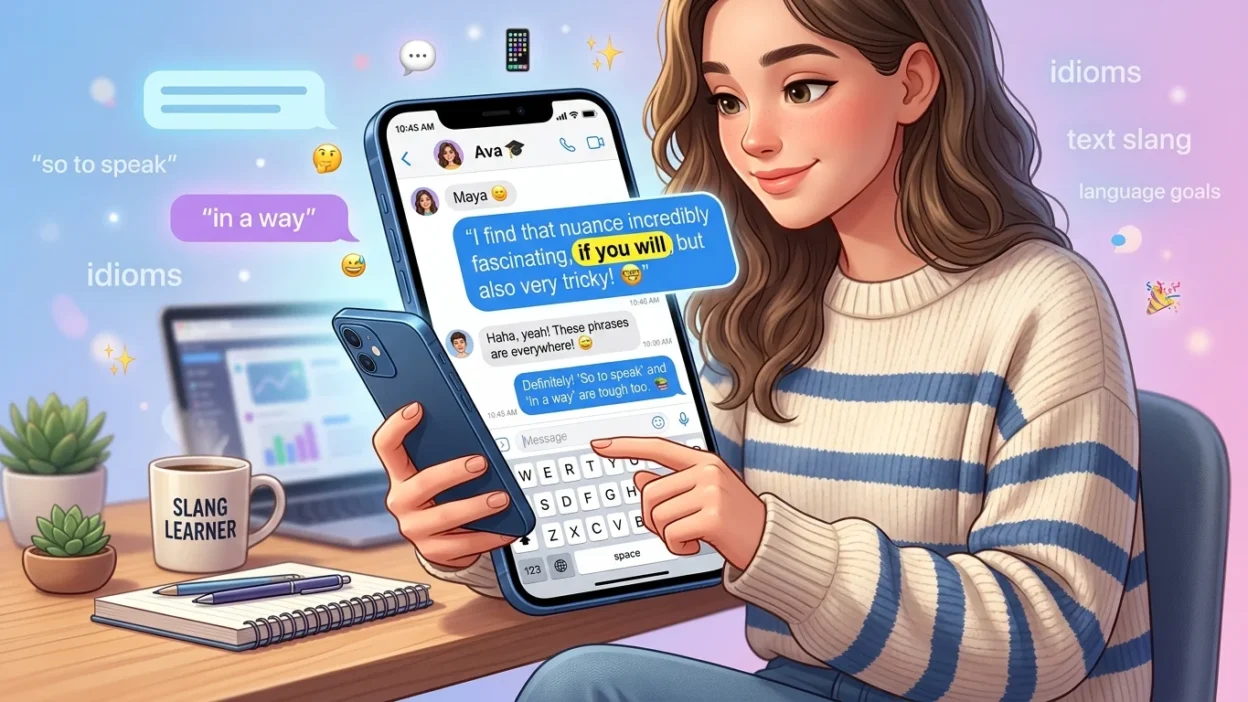
You might have seen the phrase “if you will” while reading a comment, chatting online, or even watching a video subtitle. At first glance, it feels a bit confusing. One day, you’re scrolling through a social media post and someone writes something like, “It’s a digital jungle, if you will.” You pause and wonder—what does that even mean? Is it slang, sarcasm, or some kind of code?
This phrase often shows up in casual speech and online writing, especially when people are trying to sound creative or expressive. It’s not new, but it can feel unfamiliar in texting culture where short forms and slang dominate. Once you understand it, you’ll start noticing it everywhere in conversations, captions, and even memes.
Quick Answer
“If you will” means “so to speak” or “in a way,” used to describe something in a non-literal or imaginative way.
Meaning of “If You Will” in Text and Chat
The phrase “if you will” is not a full form abbreviation or acronym. It is an English expression used to show that what you just said is not meant to be taken literally.
In simple words, it means:
- “you can think of it like this”
- “so to speak”
- “in a way”
People use it when they are trying to explain something in a creative or slightly unusual way. It adds style or tone to speech and writing.
Why people use it
- To make sentences sound more interesting
- To soften or clarify a comparison
- To express something figuratively instead of literally
- To sound thoughtful, humorous, or dramatic
Example sentence
“He is the king of the classroom, if you will.”
Bold Summary
“If you will” is used to show that something is being said in a non-literal or expressive way.
Where “If You Will” Is Commonly Used
The phrase if you will meaning in texting culture appears in many places, but it is not typical slang like “lol” or “brb.” Instead, it is more semi-formal or conversational language that people casually drop in messages.
Common places you’ll see it:
- Social media posts (Instagram captions, Facebook posts)
- YouTube comments or spoken content subtitles
- Blogs and articles
- Casual conversations or storytelling chats
- Online forums or discussions
Tone of the phrase:
- Mostly neutral to slightly formal
- Can feel creative or expressive
- Sometimes used in a humorous or dramatic tone
It is not usually used in very casual teen texting unless someone is joking or being expressive.
Real Chat Examples (Modern Texting Style)
Here are some natural examples of how people use if you will meaning in chat and social media slang:
- “this room is my chaos zone, if you will.”
- “he’s the office ninja, if you will 😂”
- “it’s a mental rollercoaster, if you will.”
- “she runs this group like a CEO, if you will.”
- “we’re living in a content factory, if you will.”
- “that playlist is my emotional support, if you will.”
- “he’s the main character of the story, if you will.”
- “this place is a money trap, if you will.”
- “it’s a vibe, if you will.”
- “that exam was a disaster movie, if you will.”
These examples show how the phrase is used to make descriptions more imaginative and expressive.
When to Use and When Not to Use “If You Will”
Understanding texting abbreviation meaning and chat usage helps you use this phrase correctly in digital communication.
✔ When to use it
- When describing something creatively
- When making a comparison or metaphor
- In storytelling or jokes
- In captions or social media posts
- When you want to sound expressive or thoughtful
✘ When not to use it
- In formal emails or business writing
- In academic essays
- When you need clear, direct communication
- In urgent or professional messages
- When speaking to someone unfamiliar with English idioms
Comparison Table
| Context | Example Phrase | Why it works or not |
|---|---|---|
| Casual chat | “he’s the boss of the group, if you will” | Works because tone is informal and expressive |
| Professional email | “please send the report, if you will” | Not suitable; sounds unclear and awkward |
| Social media caption | “a peaceful chaos, if you will” | Works well; creative tone fits platform |
| Academic writing | “the economy is unstable, if you will” | Not suitable; too vague for formal writing |
Similar Slang Words and Alternatives
If you’re exploring online chat meaning and informal chat expressions, here are some phrases similar to “if you will”:
1. So to speak
Used to show that something is not literal.
- Example: “he’s the boss, so to speak.”
2. In a way
Used for soft comparisons.
- Example: “she’s, in a way, the leader of the group.”
3. Kind of / sort of
Very casual, used in daily texting.
- Example: “it’s kind of a mess here.”
4. Basically
Used to simplify meaning.
- Example: “basically, it’s a digital jungle.”
5. You could say
Used when suggesting an idea.
- Example: “you could say he runs the place.”
6. More or less
Used when something is approximately true.
- Example: “it’s more or less organized chaos.”
Each of these expressions helps add softness, creativity, or flexibility to what you are saying.
FAQs about “If You Will Meaning”
1. What does “if you will” mean in simple words?
It means “so to speak” or “in a way,” used when something is not meant literally.
2. Is “if you will” slang?
No, it is not modern slang. It is an English phrase used in casual or semi-formal speech.
3. Can I use it in texting?
Yes, but mostly in creative or expressive messages, not in short casual chats.
4. Is it formal or informal?
It is neutral, but leans slightly toward formal or thoughtful speech.
5. Why do people say “if you will”?
People use it to make descriptions more interesting, flexible, or figurative.
6. Is it the same as “lol” or “brb”?
No. Those are abbreviations. “If you will” is a full English phrase, not slang shorthand.
7. Who uses this phrase most?
It is often used by writers, speakers, content creators, and people who enjoy expressive language.
Final Thought
The phrase “if you will” meaning in text and chat is simple once you understand it. It is not slang or a shortcut, but a stylish way to say “so to speak” or “in a way.” People use it to make their language more creative, expressive, and less literal. While it is not common in everyday short texting, it appears often in captions, storytelling, and online content where tone matters. Knowing this phrase helps you better understand modern communication and adds a more natural flow to your English expressions.