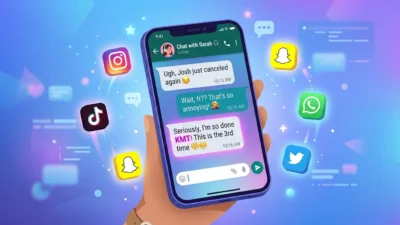
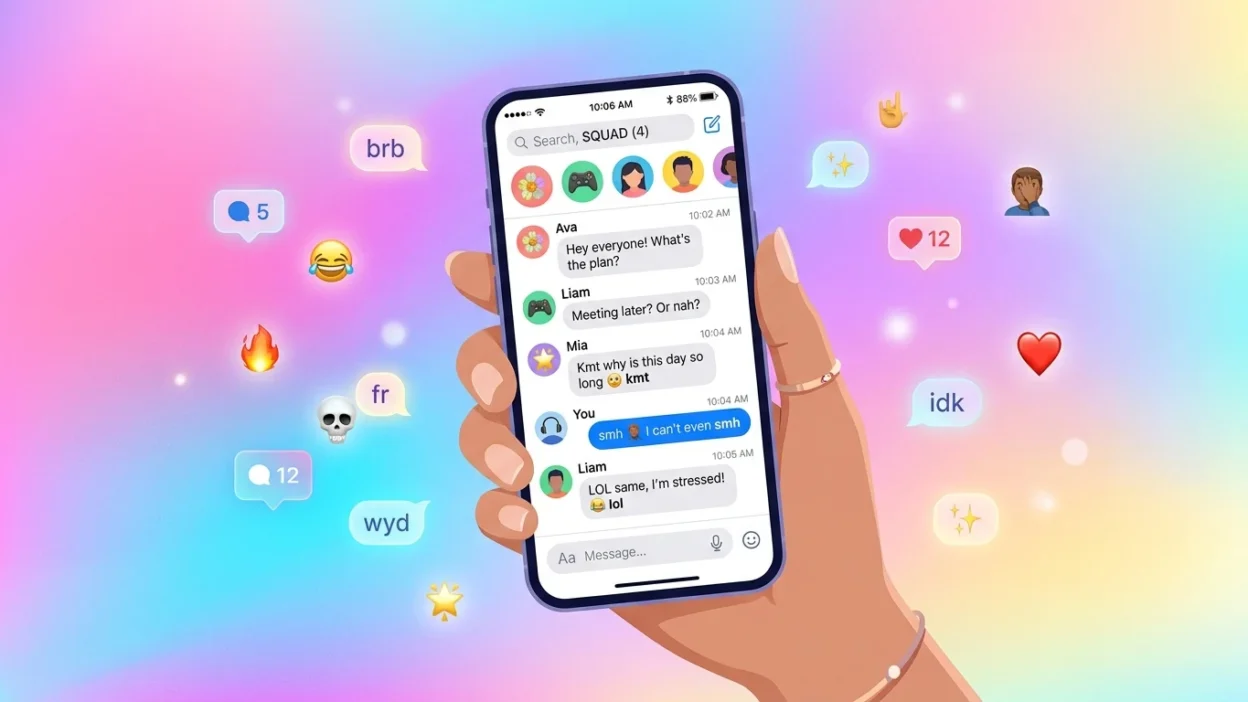
Have you ever been scrolling through messages when someone suddenly replied with “KMT” and left you wondering what they meant? Maybe a friend texted it after hearing bad news, or you spotted it in a social media comment section. At first glance, it can look confusing because it isn’t as common worldwide as abbreviations like “LOL” or “OMG.” Yet in many online communities, especially among younger users, KMT appears regularly in chats and posts.
Understanding this texting abbreviation can help you better follow conversations and avoid misunderstandings. Let’s break down exactly what KMT means in text and how people use it online.
Quick Answer: KMT means “Kiss My Teeth,” a slang expression used to show annoyance, frustration, disappointment, or disapproval.
What Does KMT Mean in Text?
The meaning of KMT in text is “Kiss My Teeth.” While the phrase may sound unusual, it refers to the act of sucking or clicking your teeth as a sign of irritation or frustration.
In many cultures, especially in parts of the Caribbean and the UK, “kissing your teeth” is a common nonverbal expression. Online, people shortened it to KMT so they could quickly express the same feeling in messages and social media posts.
Plain-English Explanation
When someone types KMT, they are usually saying:
- “That’s annoying.”
- “I can’t believe this happened.”
- “I’m disappointed.”
- “That makes me upset.”
- “Seriously?”
It often replaces a sigh, eye roll, or frustrated facial expression in digital communication.
Why People Use KMT
People use KMT because it:
- Saves time while texting.
- Shows emotion quickly.
- Makes messages feel more expressive.
- Helps convey frustration without writing a long explanation.
Example Sentence
“the bus left right before i got there, kmt”
In this example, KMT shows annoyance and disappointment.
Summary: KMT means “Kiss My Teeth” and is used to express frustration, annoyance, disappointment, or disapproval in online conversations.
Where Is KMT Commonly Used?
KMT is mainly found in casual digital communication rather than formal writing.
Text Messages
Friends often use KMT when talking about everyday problems, annoying situations, or disappointing events.
Social Media Platforms
You may see KMT on:
- Instagram comments
- TikTok captions
- X (Twitter) posts
- Facebook comments
- Snapchat messages
Direct Messages (DMs)
Many users type KMT in private conversations to react to frustrating news or situations.
Gaming Chats
Gamers sometimes use KMT when something unfair happens during a match.
Example:
“we lost because of lag again kmt”
Online Forums and Community Discussions
KMT occasionally appears in discussion boards and online communities where casual slang is common.
Tone of KMT
The tone is generally:
- Casual
- Informal
- Emotional
- Conversational
It is not considered formal or professional language.
Realistic KMT Conversation Examples
Here are some natural examples showing how KMT is used in modern texting culture.
Example 1
friend 1: i forgot my charger at home
friend 2: kmt that’s the worst
Example 2
friend 1: the concert tickets sold out
friend 2: kmt i was just about to buy them
Example 3
friend 1: my train got canceled again
friend 2: kmt that’s happening every week now
Example 4
friend 1: i studied all night and still failed
friend 2: kmt that’s so unfair
Example 5
friend 1: they changed the deadline to tomorrow
friend 2: kmt why so last minute
Example 6
friend 1: i dropped my phone
friend 2: kmt please tell me the screen is okay
Example 7
friend 1: it started raining right after i washed my car
friend 2: kmt that’s terrible timing
Example 8
friend 1: our internet stopped working during the game
friend 2: kmt no way
Example 9
friend 1: they forgot my food order
friend 2: kmt i’d be annoyed too
When to Use KMT
Knowing when to use KMT can help your messages sound natural and appropriate.
Do Use KMT When:
✅ You’re talking with friends.
✅ You want to express frustration.
✅ You’re reacting to disappointing news.
✅ You’re chatting on social media.
✅ You’re having an informal conversation.
Don’t Use KMT When:
❌ Writing professional emails.
❌ Communicating with teachers or professors.
❌ Creating formal reports.
❌ Speaking with clients or customers.
❌ In situations where slang may cause confusion.
KMT Usage Comparison Table
| Context | Example Phrase | Why It Works |
|---|---|---|
| Friend chat | “kmt i missed the bus” | Casual expression of frustration |
| Social media comment | “kmt this update is terrible” | Fits informal online discussion |
| Gaming chat | “kmt we lost again” | Quick emotional reaction |
| Work email | “kmt the report is late” | Too informal and unprofessional |
| Academic paper | “kmt this theory is wrong” | Slang is inappropriate in formal writing |
Similar Slang Words and Alternatives
If you understand KMT, you may also come across other social media slang terms with similar meanings.
| Slang | Meaning | When to Use |
|---|---|---|
| SMH | Shaking My Head | When disappointed or disapproving |
| UGH | Expression of frustration | Everyday annoyance |
| BRUH | Seriously? Really? | Reacting to something ridiculous |
| OMG | Oh My God | Surprise, shock, or excitement |
| FFS | Expression of frustration | Stronger annoyance among friends |
| SIGH | Showing disappointment | Mild frustration |
| IDC | I Don’t Care | Showing indifference |
| FR | For Real | Agreeing or emphasizing something |
KMT vs SMH
Both show frustration.
- KMT often feels more emotional or annoyed.
- SMH usually shows disappointment or disbelief.
Example:
- “kmt this keeps happening”
- “smh this keeps happening”
Both work, but KMT often sounds more frustrated.
KMT vs UGH
- UGH expresses annoyance directly.
- KMT comes from a cultural expression and may feel more conversational in certain communities.
Why Is KMT Popular in Texting Culture?
Modern texting culture is built around speed and emotion.
People want to:
- Type less.
- Express feelings quickly.
- Sound natural.
- Connect with online communities.
KMT accomplishes all of these goals. Instead of writing an entire sentence explaining frustration, users can simply type three letters and instantly communicate their feelings.
This is one reason why chat shorthand continues to grow across social media and messaging platforms.
Frequently Asked Questions (FAQ)
What does KMT stand for in text?
KMT stands for “Kiss My Teeth.” It expresses annoyance, frustration, disappointment, or disapproval.
Is KMT rude?
Not usually. It is generally considered mild slang, but it can sound negative because it expresses irritation.
Is KMT used by younger people?
Yes. KMT is most commonly used by teens, young adults, and active social media users.
Can I use KMT on Instagram or TikTok?
Yes. KMT is commonly used in comments, captions, replies, and direct messages on social media platforms.
Is KMT the same as SMH?
Not exactly. Both show frustration, but KMT often sounds more annoyed, while SMH usually expresses disappointment or disbelief.
Should I use KMT in professional communication?
No. KMT is informal chat slang and should be avoided in work emails, business messages, and formal settings.
Can KMT be misunderstood?
Yes. Some people may not know the abbreviation, especially if they are unfamiliar with texting slang or online chat culture.
Final Thought
Understanding KMT Meaning in Text helps you better navigate modern digital conversations. The abbreviation stands for “Kiss My Teeth” and is commonly used to express frustration, annoyance, disappointment, or disapproval. You’ll often see it in text messages, social media comments, gaming chats, and casual online discussions. While KMT is useful for showing emotion quickly, it works best in informal settings and should generally be avoided in professional communication. As texting culture continues to evolve, knowing terms like KMT can make online conversations easier to understand and more engaging to join.