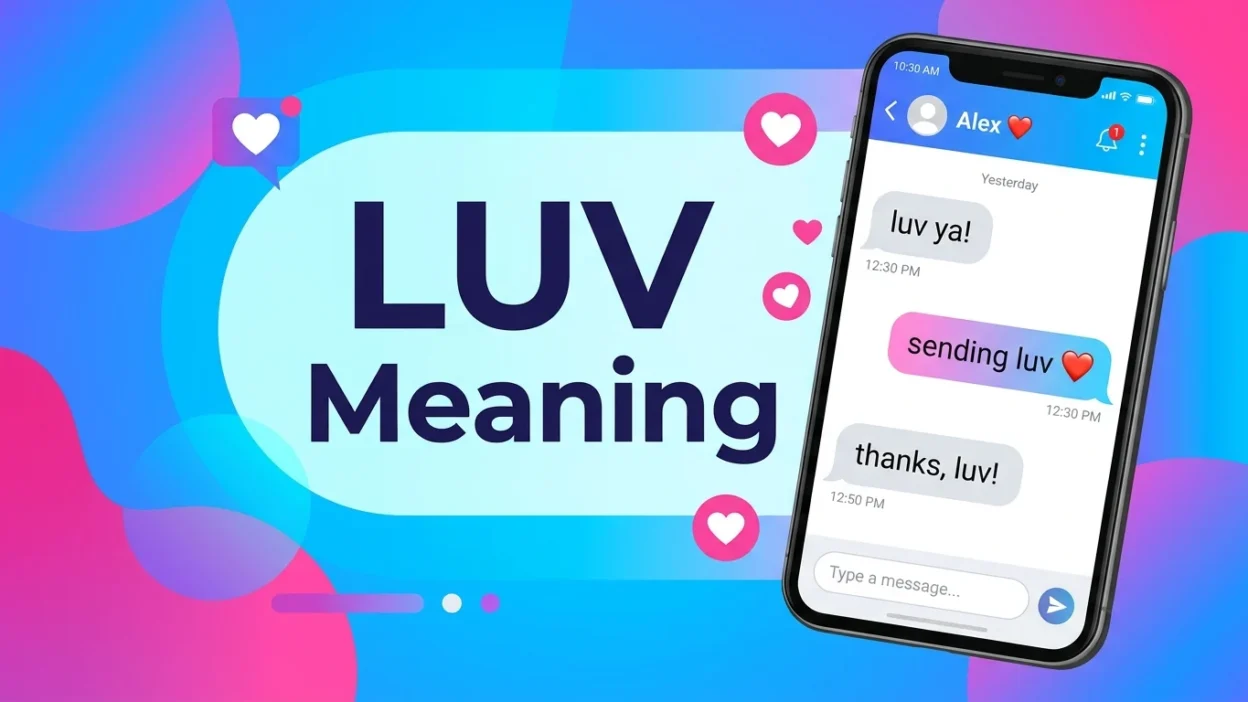
Have you ever received a message that said, “luv ya!” and paused for a second, wondering if it was a typo or something else? You’re not alone. Many people first come across LUV while texting friends, scrolling through social media comments, or chatting online.
At first glance, it may look like a misspelling of “love,” but it actually has its own place in modern texting culture. As online communication becomes faster and more casual, shortcuts like LUV help people express feelings quickly and naturally. If you’ve seen this term in a text, DM, or social media post, this guide will explain exactly what it means and how to use it.
Quick Answer: LUV means “love” and is an informal, casual way of expressing affection, care, or friendship in text messages and online chats.
What Does LUV Mean?
LUV is a casual spelling of the word “love.” It is not technically an abbreviation or acronym. Instead, it is a simplified and playful version of the word that people often use in texting, social media slang, and online conversations.
People use LUV when they want to show affection, appreciation, friendship, or warmth without sounding overly serious. It creates a relaxed and friendly tone that fits well with modern digital communication.
Why Do People Use LUV?
There are several reasons why people choose LUV instead of writing “love”:
- It feels more casual and fun.
- It matches the relaxed style of texting culture.
- It can sound less serious than the full word “love.”
- It adds personality to messages.
- It helps create a friendly and affectionate tone.
Example
“thanks for helping me today, luv ya!”
In this example, the sender is expressing appreciation and affection in a casual way.
Summary: LUV simply means “love” and is used as a friendly, informal way to show affection or care in digital conversations.
Where Is LUV Commonly Used?
You can find LUV across many forms of online communication. Because it is casual and friendly, it works best in relaxed settings rather than professional environments.
Text Messages
Friends, family members, and romantic partners often use LUV in everyday texting conversations.
Social Media
People frequently use LUV in:
- Instagram captions
- TikTok comments
- Facebook posts
- X (Twitter) replies
- Snapchat messages
Direct Messages (DMs)
LUV is common in private chats where users want to sound warm and friendly.
Gaming Chats
Online gamers sometimes use LUV to thank teammates or joke around with friends.
Online Forums and Communities
Members of online groups may use LUV when showing support, appreciation, or encouragement.
Tone of LUV
The tone is generally:
- Casual
- Informal
- Friendly
- Affectionate
It is not considered formal and should usually be avoided in professional communication.
Real Conversation Examples Using LUV
Here are some realistic examples of how people use LUV in modern texting and online chat.
- “thanks for checking on me, luv ya!”
- “good luck on your exam tomorrow, luv!”
- “i had so much fun today, luv spending time with you.”
- “luv this new song so much!”
- “you’re the best friend ever, luv u.”
- “aww that’s so sweet, luv you too.”
- “can’t wait to see you this weekend, luv.”
- “luv your new profile picture!”
- “sending positive vibes your way, luv.”
- “miss talking to you every day, luv ya.”
These examples show how flexible the term is in both friendship and romantic contexts.
When to Use LUV and When Not to Use It
Understanding the right situations for using LUV can help you avoid awkward misunderstandings.
Use LUV When
✅ Messaging close friends
✅ Chatting with family members
✅ Talking to a romantic partner
✅ Leaving supportive social media comments
✅ Sending friendly or affectionate messages
✅ Using casual online chat language
Avoid Using LUV When
❌ Writing business emails
❌ Communicating with clients
❌ Submitting academic assignments
❌ Writing formal reports
❌ Contacting people you don’t know well
❌ Participating in professional discussions
Quick Comparison Table
| Context | Example Phrase | Why It Works |
|---|---|---|
| Friend Text | “luv ya, have fun!” | Casual and friendly |
| Family Chat | “goodnight, luv you!” | Shows affection |
| Romantic Message | “miss you, luv” | Warm and personal |
| Work Email | “luv your feedback” | Too informal |
| Job Application | “would luv to join your team” | Not professional |
| Academic Paper | “students luv technology” | Informal language is inappropriate |
The key is matching the term to the situation and audience.
Similar Slang Words and Alternatives
If you understand LUV, you may also come across similar social media slang and texting shorthand.
| Term | Meaning | Best Used When |
|---|---|---|
| Love | Standard spelling | Any situation |
| Luv Ya | Love you | Friendly conversations |
| Luv U | Love you | Casual texting |
| XOXO | Hugs and kisses | Affectionate messages |
| BFF | Best friends forever | Talking about close friends |
| Bestie | Close friend | Casual chats |
| <3 | Heart symbol representing love | Social media and texting |
| Ly | Love you | Quick texting shorthand |
| ILY | I love you | Strong expression of affection |
| Mwah | Kissing sound | Playful messages |
LUV vs ILY
While both express affection, they are slightly different.
- LUV often feels lighter and more casual.
- ILY (I Love You) usually carries stronger emotional meaning.
For example:
- “luv ya!” = Friendly and relaxed.
- “ily” = More direct and heartfelt.
Why LUV Became Popular in Texting Culture
The rise of smartphones, instant messaging, and social media changed the way people communicate. Users started looking for faster, simpler ways to express emotions.
Terms like:
- LOL
- BRB
- OMG
- ILY
- LUV
became part of everyday digital language.
LUV gained popularity because it feels warm and approachable. It also reflects the creative spelling styles often seen in online chat meaning and social media slang.
Today, people of all ages use it, although it is especially common among teens, young adults, and active social media users.
Can LUV Have Different Meanings?
In most texting and online communication, LUV simply means love.
However, context always matters.
For example:
- “luv this movie” means “love this movie.”
- “luv ya” means “love you.”
- “sending luv” means “sending love.”
The meaning stays largely the same, but the specific message changes depending on the sentence.
Common Mistakes People Make
Thinking It’s an Acronym
Many people assume LUV stands for several words. In reality, it is usually just an alternative spelling of “love.”
Using It Professionally
Because it belongs to informal chat culture, it may appear unprofessional in work-related communication.
Misreading the Tone
Sometimes people think LUV automatically signals romantic feelings. While it can, it is also commonly used among friends and family members.
Understanding the relationship between the people involved helps clarify the intended meaning.
FAQ About LUV Meaning
What does LUV mean in text?
LUV means love. It is an informal and friendly spelling used in text messages, social media posts, and online chats.
Is LUV the same as love?
Yes. LUV carries the same basic meaning as “love,” but it usually sounds more casual and playful.
Is LUV romantic?
Sometimes. It can be romantic when used between partners, but it is also commonly used among friends and family.
Who uses LUV the most?
Teens, young adults, social media users, and people who regularly communicate through texting often use LUV.
Is LUV considered slang?
Yes. It is generally viewed as a form of internet slang and informal chat language.
Can I use LUV in professional emails?
No. Professional communication should use standard language instead of casual texting slang.
What is the difference between LUV and ILY?
LUV is often lighter and more casual, while ILY (I Love You) is usually a stronger and more direct expression of affection.
Final Thought
The LUV Meaning is simple: it is a casual, friendly way of saying “love.” Whether you’re texting a friend, replying to a social media post, chatting with family, or sending a sweet message to someone special, LUV helps express affection in a relaxed and modern way. As texting culture and online communication continue to evolve, terms like LUV remain popular because they are quick, warm, and easy to understand. Knowing how and when to use it can help you communicate naturally and confidently in today’s digital world.

Michel Clark is an emerging author and content creator behind Ribacks.com, where he writes insightful articles on [your niche/topics e.g., lifestyle, tech, personal growth]. Known for fresh perspectives and engaging storytelling, Clark is building a growing readership with thoughtful writing and meaningful connections in the online community.