
Introduction
One day, you might be scrolling through social media or chatting in a finance group, and suddenly you see someone say, “Always set your stop loss!” At first, it feels confusing. You might wonder what “stop loss” even means or why everyone talks about it like it’s so important.
Many beginners feel the same way when they first enter the world of trading or even just read online discussions about stocks and crypto. The term sounds technical, but it actually plays a very simple and powerful role in protecting money. Once you understand it, the whole idea becomes much clearer and easier to use in real life trading situations.
Quick Answer
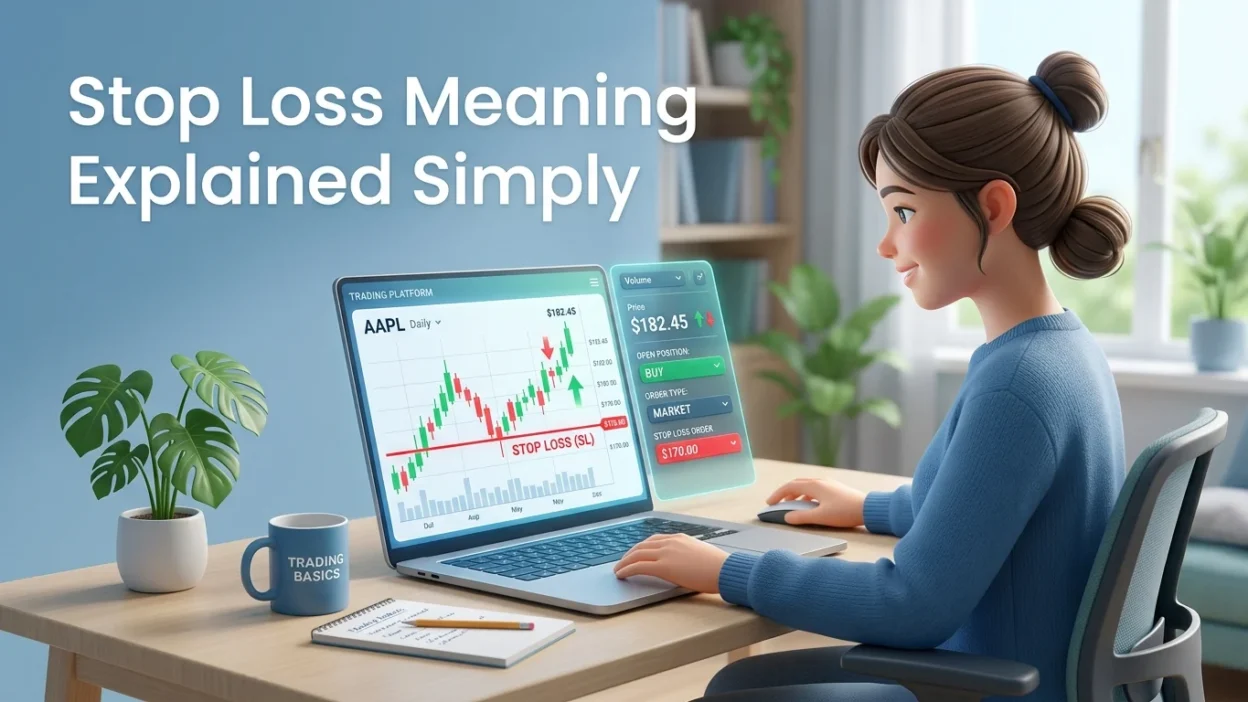
A stop loss is a trading tool that automatically sells an asset when its price falls to a set level to limit your loss.
What is Stop Loss Meaning in Simple Words?
The stop loss meaning in trading is very straightforward. It is a pre-set price level where you decide, “If the price goes down to here, I will exit the trade.”
There is no full form of stop loss because it is not an abbreviation. It is simply a financial risk management term used in stock trading, crypto trading, forex, and other investment markets.
Plain-English Explanation
Imagine you buy a stock at $100. You don’t want to lose too much money if the price falls. So, you set a stop loss at $90. If the price drops to $90, your stock is automatically sold. This protects you from bigger losses.
Why People Use Stop Loss
People use stop loss to:
- Protect their money from big losses
- Avoid emotional decision-making
- Automate trading decisions
- Stay disciplined in volatile markets
Example Sentence
“I set a stop loss at 5% below my buying price to manage risk.”
In short: A stop loss is a safety rule that helps you limit your trading losses automatically.
Where is Stop Loss Commonly Used?
The term stop loss meaning in text and trading discussions is mostly used in financial conversations. You will often see it in:
- Stock market trading apps
- Crypto trading platforms
- Forex trading communities
- Reddit and Twitter finance discussions
- YouTube trading tutorials
- WhatsApp or Telegram trading groups
Tone of Usage
The tone is usually neutral to semi-formal, but in chats and social media it becomes more casual and informal. Traders often shorten explanations when talking quickly online.
Real Chat Examples (Modern Text Style)
Here are some natural conversations showing how people use the term:
- “bro i bought btc but set a tight stop loss just in case”
- “always use stop loss or you’ll regret it later”
- “my stop loss hit today, small loss but safe exit”
- “what stop loss should i keep for this trade?”
- “don’t trade without stop loss bro, market is risky”
- “i forgot to set stop loss and lost too much 💀”
- “tight stop loss = low risk but may exit early”
- “move your stop loss to breakeven if trade goes well”
- “crypto is wild, stop loss is a must”
These examples show how naturally the term fits into everyday trading conversations online.
When to Use and When Not to Use Stop Loss
When to Use It
- While trading stocks, crypto, or forex
- When markets are volatile
- When you want to protect capital
- When you cannot monitor trades all the time
When Not to Use It
- Long-term investing (sometimes optional)
- Highly illiquid assets where price gaps are common
- When you don’t understand market behavior yet
- Emotional or revenge trading situations
Quick Comparison Table
| Context | Example Phrase | Why It Works / Not Works |
|---|---|---|
| Day trading | “set stop loss at 2%” | protects quick trades |
| Long-term investing | “no stop loss needed” | price fluctuations are normal |
| Emotional trading | “i’ll decide later” | risky, no discipline |
| Risk management | “stop loss helps control risk” | smart and structured |
Similar Slang Words and Alternatives
In trading and online chat, you may also hear similar terms. Here are some easy explanations:
1. Take Profit
This is the opposite of stop loss. It is a price where you automatically exit with profit.
2. Risk Management
A broader term that includes stop loss, position sizing, and planning trades safely.
3. Cut Losses
A casual phrase meaning to exit a losing trade early.
4. Stop Out
When your trade is automatically closed due to hitting stop loss or margin limits.
5. Break Even
Moving your stop loss to your entry price so you don’t lose money.
Each of these terms is part of online trading slang and financial chat culture, especially among beginners and active traders.
FAQ: Stop Loss Meaning Explained
1. What does stop loss mean in simple words?
It means setting a price limit where your trade will automatically close to prevent bigger losses.
2. Is stop loss only used in stock trading?
No, it is used in stocks, crypto, forex, and other financial markets.
3. Is stop loss guaranteed to work?
Mostly yes, but in fast markets prices may skip levels due to volatility.
4. Do beginners need stop loss?
Yes, it is very important for beginners to control risk and avoid big losses.
5. Can stop loss be changed?
Yes, traders often adjust it based on market movement.
6. Is stop loss part of trading strategy?
Yes, it is a core part of any proper risk management strategy.
7. Why do traders ignore stop loss sometimes?
Some traders avoid it due to emotions, but this usually increases risk.
Final Thought
The stop loss meaning is simple but powerful. It is a tool that protects traders from losing too much money by automatically closing a trade at a set price. Whether you are trading stocks or crypto, it helps you stay safe, disciplined, and less emotional.
In today’s fast-moving digital trading world, understanding stop loss is not just helpful—it is essential. It allows beginners and experienced traders to manage risk better and make smarter decisions without panic.