
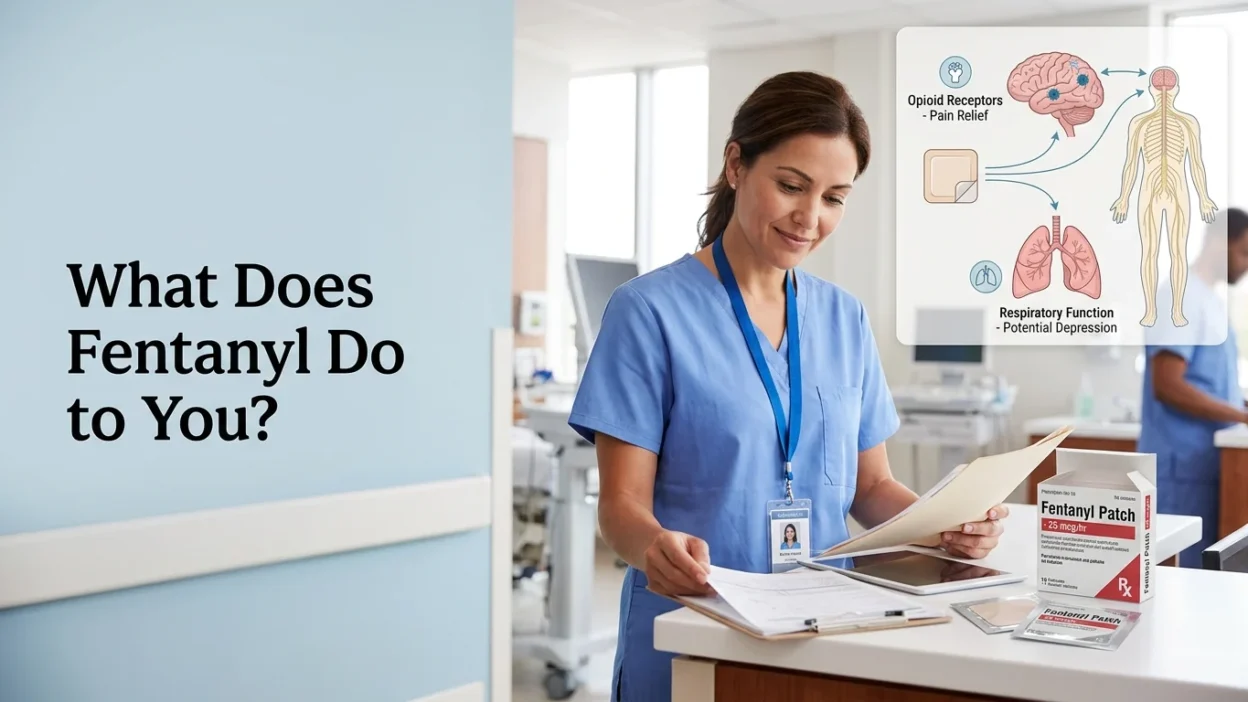
Have you ever been scrolling through social media, reading news headlines, or watching a video when you suddenly saw the term fentanyl and wondered what it actually does to a person?
Maybe someone mentioned it in a comment section, a news report, or an online discussion about health and safety. Because fentanyl is talked about so often today, many people are curious about its effects and why it is considered so dangerous. If you’re looking for a simple and clear explanation, you’re in the right place.
Quick Answer: Fentanyl is a very powerful opioid drug that can cause pain relief, relaxation, drowsiness, and euphoria, but it can also slow breathing and lead to overdose or death if misused.
What Does Fentanyl Do to You?
Fentanyl is a synthetic opioid, which means it is a man-made drug designed to work like other opioids such as morphine. Doctors sometimes prescribe it to treat severe pain, especially after surgery or for people with serious medical conditions.
When fentanyl enters the body, it attaches to opioid receptors in the brain. These receptors control pain, emotions, and breathing. As a result, fentanyl can change how a person feels and functions.
Some common effects include:
- Pain relief
- Relaxation
- Sleepiness
- Feelings of pleasure or euphoria
- Slower breathing
- Slower heart rate
- Dizziness
- Confusion
The reason fentanyl receives so much attention is that it is extremely powerful. Even a very small amount can have strong effects on the body.
Summary: Fentanyl is a powerful opioid that affects the brain and body by reducing pain but also slowing important functions like breathing.
How Fentanyl Affects the Body
Understanding what fentanyl does to you is easier when you look at how it affects different parts of the body.
Brain
Fentanyl changes the way the brain processes pain signals. It can create feelings of calmness, happiness, or relaxation. However, it can also cause confusion, poor judgment, and difficulty concentrating.
Breathing
One of the most dangerous effects is slowed breathing. High doses can cause breathing to become very slow or even stop completely.
Heart and Blood Pressure
Fentanyl may lower heart rate and blood pressure. Some people feel lightheaded or dizzy because of these changes.
Muscles and Movement
Users may experience muscle stiffness, weakness, or slower reaction times. This can make driving or operating machinery dangerous.
Digestive System
Like many opioids, fentanyl can cause:
- Constipation
- Nausea
- Vomiting
- Reduced appetite
Summary: Fentanyl affects multiple body systems, with breathing problems being the most serious risk.
Short-Term Effects of Fentanyl
The short-term effects can appear quickly, especially when fentanyl is taken in high amounts.
Common short-term effects include:
- Feeling relaxed
- Pain reduction
- Drowsiness
- Dizziness
- Dry mouth
- Small pupils
- Slowed breathing
- Sleepiness
- Reduced awareness
Some people may feel calm and comfortable at first. However, dangerous side effects can develop rapidly if too much fentanyl is present in the body.
Long-Term Effects of Fentanyl
Repeated use can lead to additional health concerns.
Possible long-term effects include:
- Physical dependence
- Opioid use disorder
- Increased tolerance
- Chronic constipation
- Mood changes
- Sleep problems
- Memory difficulties
Tolerance means a person may need larger amounts of the drug to feel the same effects, which increases the risk of overdose.
Summary: Long-term fentanyl use can lead to dependence, tolerance, and serious health problems.
Why Is Fentanyl Considered So Dangerous?
Many people ask, “What does fentanyl do to you that makes it more dangerous than other drugs?”
The answer is simple: its strength.
Fentanyl is much stronger than many other opioids. Because of this, small differences in dose can create huge differences in effect.
Risks include:
- Accidental overdose
- Severe breathing problems
- Loss of consciousness
- Death
Another concern is that illegally made fentanyl may be mixed into other substances without a person’s knowledge. This increases the risk because someone may not realize they are taking fentanyl at all.
Signs of a Fentanyl Overdose
Knowing the warning signs can save lives.
Possible overdose symptoms include:
- Very slow or stopped breathing
- Extreme sleepiness
- Inability to wake up
- Blue or gray lips
- Pinpoint pupils
- Weak pulse
- Unresponsiveness
If an overdose is suspected, emergency medical help should be contacted immediately.
Summary: A fentanyl overdose is a medical emergency and requires immediate professional treatment.
Medical Uses of Fentanyl
Despite its risks, fentanyl has legitimate medical uses when prescribed and monitored by healthcare professionals.
Doctors may use fentanyl for:
- Severe post-surgery pain
- Cancer-related pain
- Serious chronic pain conditions
- Certain anesthesia procedures
Medical fentanyl comes in forms such as:
- Patches
- Injections
- Lozenges
- Nasal sprays
When used exactly as prescribed, it can help manage severe pain effectively.
Common Myths About Fentanyl
Myth 1: Every Exposure Causes an Overdose
Many people believe simply touching fentanyl automatically causes an overdose. This is not generally true. The risk depends on the amount and type of exposure.
Myth 2: Fentanyl Has No Medical Purpose
Fentanyl is widely used in hospitals and healthcare settings under professional supervision.
Myth 3: Only Drug Users Are Affected
Unfortunately, accidental exposure and contamination of illegal substances mean that many different people can be affected.
Myth 4: Overdose Always Happens Immediately
While fentanyl acts quickly, symptoms can vary depending on the situation and amount involved.
Realistic Examples of How People Discuss Fentanyl Online
Below are examples of conversations where people might discuss fentanyl in social media posts, comments, or chats.
Example 1
person 1: “why is fentanyl always in the news?”
person 2: “because it’s very powerful and can cause deadly overdoses.”
Example 2
person 1: “what does fentanyl do to you?”
person 2: “it can relieve pain, but it can also slow your breathing.”
Example 3
person 1: “my doctor mentioned fentanyl patches.”
person 2: “they’re sometimes used for severe pain treatment.”
Example 4
person 1: “is fentanyl stronger than morphine?”
person 2: “yes, it’s significantly more potent.”
Example 5
person 1: “why are people worried about fentanyl?”
person 2: “because even small amounts can be dangerous.”
Example 6
person 1: “can fentanyl cause sleepiness?”
person 2: “yes, drowsiness is a common effect.”
Example 7
person 1: “what’s the biggest risk?”
person 2: “breathing can slow down too much.”
Example 8
person 1: “is medical fentanyl legal?”
person 2: “yes, when prescribed by a doctor.”
When to Talk About Fentanyl
Do
- Use factual information.
- Discuss medical uses accurately.
- Talk about safety and health risks.
- Share trusted health information.
- Encourage professional medical advice.
Don’t
- Spread myths or rumors.
- Give instructions for misuse.
- Minimize overdose risks.
- Assume all information online is correct.
- Replace professional medical guidance with social media advice.
Quick Comparison Table
| Context | Example Phrase | Why It Works |
|---|---|---|
| Health discussion | “Fentanyl is used for severe pain.” | Accurate medical context |
| News discussion | “Fentanyl overdoses are a major concern.” | Focuses on public health |
| Education | “What does fentanyl do to you?” | Seeks information |
| Joke or prank | “Let’s joke about fentanyl.” | Inappropriate because of serious risks |
Related Terms You May Hear
| Term | Meaning | When Used |
|---|---|---|
| Opioid | A class of pain-relieving drugs | Medical discussions |
| Morphine | A common opioid pain medication | Pain management topics |
| Oxycodone | Prescription opioid medication | Healthcare conversations |
| Naloxone | Medication that can reverse opioid overdoses | Emergency situations |
| Overdose | Taking enough of a substance to cause severe harm | Safety discussions |
| Dependence | The body adapts to a drug over time | Addiction and health topics |
Understanding these related terms can help you better follow conversations about fentanyl and opioid safety.
Frequently Asked Questions
What does fentanyl do to you immediately?
It can cause pain relief, relaxation, drowsiness, and slowed breathing, depending on the dose and situation.
Why is fentanyl so powerful?
Fentanyl is a highly potent synthetic opioid that strongly affects opioid receptors in the brain.
Is fentanyl used in hospitals?
Yes. Doctors use fentanyl for certain medical procedures and severe pain treatment.
Can fentanyl be dangerous?
Yes. Misuse or excessive amounts can cause overdose and life-threatening breathing problems.
What is the biggest risk of fentanyl?
The most serious risk is respiratory depression, which means breathing becomes dangerously slow or stops.
Can fentanyl cause addiction?
Long-term or repeated use can lead to dependence and opioid use disorder in some people.
Why is fentanyl often mentioned in the news?
Because it plays a major role in overdose deaths and public health discussions in many countries.
Final Thought
If you’ve ever wondered what does fentanyl do to you, the simple answer is that it is a powerful opioid that can relieve severe pain but also carries serious risks. It affects the brain, breathing, heart rate, and overall body function. While it has important medical uses when prescribed by healthcare professionals, misuse can lead to overdose and other life-threatening complications. Understanding how fentanyl works helps people make informed decisions, recognize warning signs, and stay safe when discussing this important health topic.