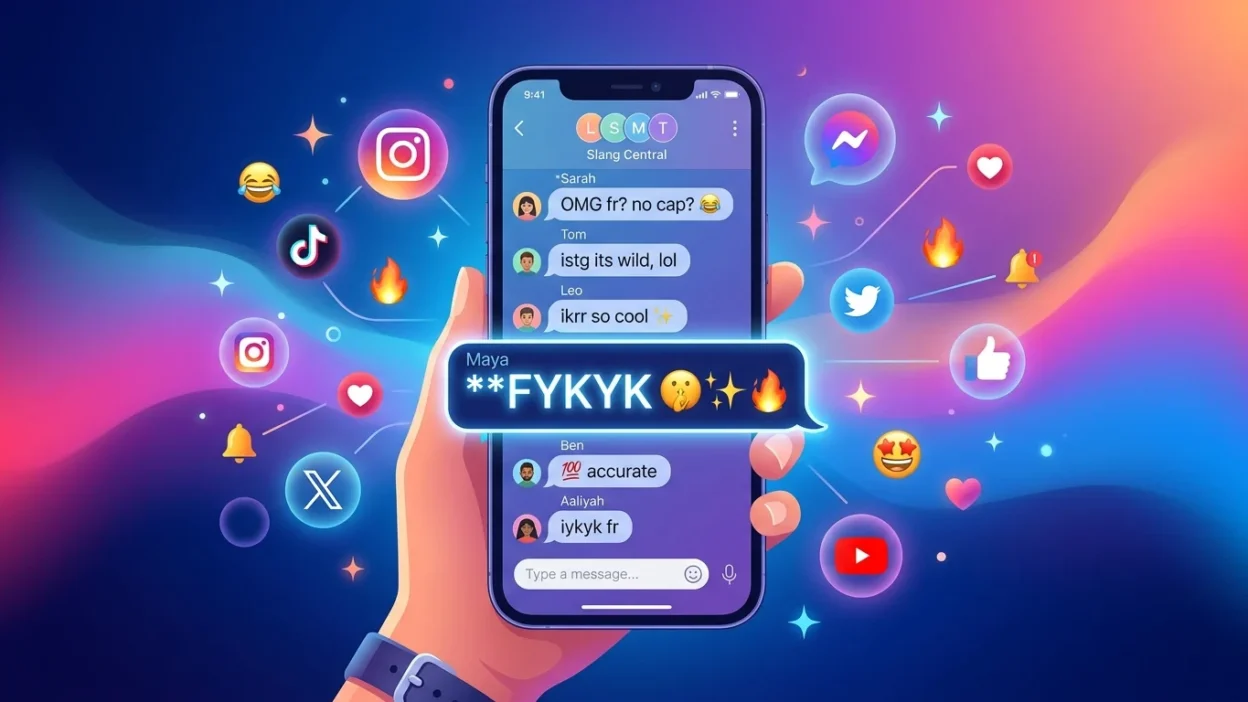
You’re typing fast in a group chat, and suddenly someone says “oop” after a funny mistake or awkward moment. You pause for a second. It doesn’t look like a full word, and it’s not clear if it’s an acronym or just a sound. You might even wonder if your phone missed part of the message.
This tiny expression shows up a lot on TikTok, Instagram comments, Snapchat streaks, and gaming chats. People use it so quickly that it almost feels like a reaction instead of a word. Once you understand it, you start noticing it everywhere in online conversations.
Quick Answer: OOP in text usually means a reaction like “oops” or surprise, used when something unexpected, awkward, or funny happens in a conversation.
Meaning of OOP in Text
The OOP meaning in text is most commonly connected to the word “oops.” It is used as a quick reaction when something goes wrong, feels awkward, or surprises someone in a lighthearted way.
There is no official full form like a formal abbreviation. Instead, “oop” evolved from internet culture as a short emotional reaction sound. It is often used when people:
- make a small mistake
- see something shocking
- feel awkward suddenly
- want to react quickly without typing full sentences
Why people use OOP:
- It is short and fast to type
- It expresses emotion instantly
- It fits perfectly in memes and social media posts
- It feels playful and casual
- It makes conversations more expressive
Example sentence:
“oop i didn’t mean to send that message”
Bold Summary: OOP is a casual texting reaction used to show surprise, awkwardness, or a small mistake in online conversations.
Where OOP Is Commonly Used
The OOP meaning in chat is very popular in online spaces where people react quickly and casually. It is not used in formal writing or professional communication.
You will mostly see it in:
- Text messaging apps like WhatsApp and iMessage
- Social media platforms such as TikTok, Instagram, and Snapchat
- Comment sections reacting to memes or videos
- Gaming chats during funny or unexpected moments
- Online forums and fandom discussions
- Direct messages (DMs) between friends
Tone of OOP:
The tone is usually:
- casual
- playful
- humorous
- slightly awkward or surprised
It is part of modern internet slang and texting culture, where emotions are often shown using short words or sounds instead of full sentences.
OOP is NOT used in:
- formal emails
- business communication
- academic writing
- professional reports
7–10 Real Conversation Examples Using OOP
Here are realistic lowercase chat examples showing how people use OOP in everyday texting:
“oop i sent that to the wrong person”
“oop that was embarrassing lol”
“oop didn’t see you there”
“oop i forgot about the homework”
“oop that joke went too far”
“oop she saw my message instantly”
“oop i didn’t expect that ending”
“oop my bad i clicked the wrong thing”
“oop that got awkward real quick”
“oop i just realized what you meant”
These examples show how “oop” adds emotion without needing full sentences.
When to Use and When Not to Use OOP
Like many text slang meanings and chat shorthand expressions, OOP works best in the right context.
✔ When to Use OOP:
- Funny or awkward situations
- Casual chats with friends
- Social media reactions
- Meme replies or comments
- Gaming mistakes or surprises
✘ When NOT to Use OOP:
- Professional emails or work chats
- School assignments or essays
- Formal announcements
- Serious conversations
- Situations requiring clear explanations
Quick Comparison Table
| Context | Example Phrase | Why It Works / Doesn’t Work |
|---|---|---|
| Casual chat | “oop my bad i missed it” | Works because it shows a light mistake |
| Work email | “oop I forgot the report” | Not appropriate for formal tone |
| Meme comment | “oop that’s funny” | Works well for reaction |
| Academic writing | “oop the answer is incorrect” | Too informal for school use |
Similar Slang Words or Alternatives
The OOP meaning in text slang culture is closely related to other reaction-based words. Here are some similar expressions:
1. Oops
The full word version of OOP, used in similar situations.
Example: “oops i made a mistake”
2. Oof
Used when something awkward or painful happens.
Example: “oof that must’ve hurt”
3. LOL (Laugh Out Loud)
Used when something is funny.
Example: “lol that was crazy”
4. Bruh
Used for disbelief or frustration.
Example: “bruh really?”
5. Omg (Oh My God)
Used for surprise or shock.
Example: “omg no way”
Each of these helps express emotion quickly in online chat and texting culture, just like OOP.
FAQs About OOP Meaning in Text
1. What does OOP mean in texting?
OOP is a reaction word used to show surprise, awkwardness, or a small mistake.
2. Is OOP formal or informal?
OOP is completely informal and used only in casual conversations.
3. Where is OOP commonly used?
It is used in TikTok, Instagram, Snapchat, WhatsApp, gaming chats, and online comments.
4. Is OOP the same as OOPS?
Yes, OOP is a shorter, more modern version of “oops” used in internet slang.
5. Why do people say OOP instead of OOPS?
Because it feels faster, more playful, and fits better in memes and quick reactions.
6. Is OOP positive or negative?
It depends on the situation. It can be funny, awkward, or mildly surprising.
7. Do all people understand OOP?
Not everyone, but it is widely understood among social media users and younger audiences.
Final Thought
The OOP meaning in text shows how modern communication has become fast, expressive, and playful. Instead of typing full reactions like “oops,” people now use short slang like OOP to quickly show emotion in chats. It is widely used in social media slang, memes, gaming conversations, and informal texting culture, especially when something funny or awkward happens.
Understanding terms like OOP helps you stay updated with online communication trends and makes it easier to follow casual conversations across social media platforms. Just remember—it’s best used in fun, informal chats, not serious or professional situations.