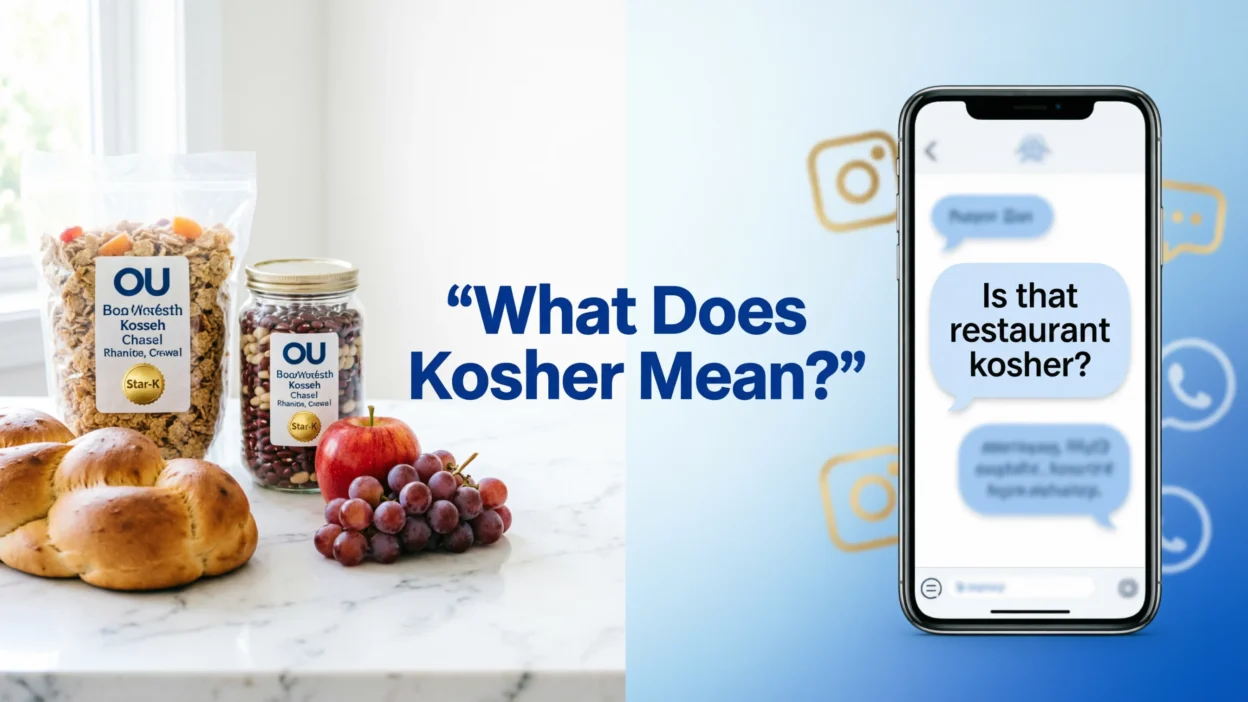
A lot of people first hear the word “kosher” while watching a cooking video, scrolling social media, or reading restaurant reviews online.
Maybe someone said, “Is that food kosher?” or a friend texted, “That deal sounds kosher to me.” At first, the word can feel confusing because it seems to have different meanings depending on the situation.
The truth is that “kosher” has both a traditional religious meaning and a casual everyday meaning used in modern conversations. Today, people use it in food discussions, online chats, memes, and even texting culture. Once you understand the basic idea behind the word, it becomes much easier to recognize how people use it in real life and on social media.
Quick Answer:
“Kosher” means something follows Jewish dietary rules or, in casual conversation, something that seems honest, proper, or acceptable.
What Does Kosher Mean in Text?
The word “kosher” originally comes from Jewish dietary laws. Foods that follow these religious rules are called kosher foods.
But in modern texting and online chat, people often use “kosher” in a more casual way. In informal conversation, it usually means:
- Legit
- Acceptable
- Honest
- Safe
- Proper
For example:
“that plan sounds kosher to me.”
This means:
“that plan seems okay or trustworthy.”
Unlike many texting abbreviations, kosher is not a short form or acronym. It is a real word that has become popular in modern digital communication.
One-line summary: “Kosher” can mean religiously approved food or something that seems honest and acceptable.
The Original Meaning of Kosher
The traditional meaning of kosher comes from Jewish dietary laws, also called kashrut.
These rules explain:
- Which foods Jewish people can eat
- How food should be prepared
- Which foods should not be mixed together
For example:
- Pork is not considered kosher.
- Certain seafood is not kosher.
- Meat and dairy are traditionally kept separate.
Many packaged foods have kosher certification labels to show they meet these standards.
This meaning is formal, religious, and cultural.
The Casual Internet Meaning of Kosher
Over time, people started using the word in everyday speech.
Now, many people casually say:
- “that’s kosher”
when they mean: - “that’s fine”
- “that’s acceptable”
- “that seems fair”
This version is very common in:
- Text messages
- Social media comments
- Online forums
- Group chats
- Informal conversations
The tone is usually:
- Casual
- Neutral
- Friendly
Why People Use the Word Kosher
People like using “kosher” because it quickly explains that something feels right or trustworthy.
Instead of saying:
- “this seems acceptable and honest”
People simply say:
- “it’s kosher.”
It saves time and sounds natural in modern online chat.
Where Is Kosher Commonly Used?
The word appears in many different places online and offline.
Food and Restaurants
This is the most common traditional use.
Examples:
- kosher restaurants
- kosher snacks
- kosher meat
Texting and Informal Chat
Friends often use the word casually.
Example:
- “is this website kosher?”
Meaning:
- “is this website safe or legit?”
Social Media
People use it in comments, captions, memes, and jokes.
Example:
- “everything looks kosher here.”
Business and Workplace Conversations
Sometimes coworkers use the word informally.
Example:
- “the numbers look kosher.”
Meaning:
- “everything seems correct.”
Online Forums and Gaming Chats
Gamers and internet users may use the word jokingly.
Example:
- “that trade isn’t kosher.”
Meaning:
- “that trade feels unfair or suspicious.”
Realistic Conversation Examples
Here are natural texting examples showing how people use “kosher” online.
friend 1: is this seller legit?
friend 2: yeah, looks kosher to me
coworker: do these numbers match?
manager: yep, everything’s kosher
friend: wanna eat there tonight?
friend 2: sure, i heard it’s kosher food
gamer: that move was kinda sus
friend: nah bro it was kosher
roommate: can i use your charger?
friend: yeah that’s kosher
friend: this deal feels weird
friend 2: honestly not kosher at all
customer: is this product authentic?
seller: totally kosher
friend: are we allowed to park here?
friend 2: i think it’s kosher
coworker: boss approved the change
employee: cool, then it’s kosher
friend: these snacks are kosher certified
When to Use the Word Kosher
The meaning depends on the situation.
Do Use It When:
- Talking about Jewish dietary rules
- Describing food certification
- Saying something seems fair or acceptable
- Having casual conversations
- Chatting informally online
Don’t Use It When:
- You are unsure about the religious context
- Making jokes about religion
- In very formal academic writing
- In situations where clearer wording works better
Quick Comparison Table
| Context | Example Phrase | Why It Works |
|---|---|---|
| Food discussion | “this restaurant serves kosher food” | Correct religious meaning |
| Casual chat | “that idea sounds kosher” | Means acceptable |
| Suspicious situation | “that deal isn’t kosher” | Means unfair or shady |
| Formal legal writing | “the contract is kosher” | Too informal |
Similar Words and Alternatives
Here are some similar words people use instead of kosher.
| Word | Meaning | Best Use |
|---|---|---|
| Legit | Real or trustworthy | Casual texting |
| Valid | Acceptable or correct | Online chat |
| Fair | Honest or reasonable | General use |
| Safe | Not risky | Websites or products |
| Proper | Correct or appropriate | Neutral tone |
| Approved | Officially accepted | Business or rules |
| Authentic | Genuine or real | Products or brands |
Kosher vs Legit
These two are very similar in online slang.
- Kosher sounds slightly older or more playful.
- Legit sounds more modern and internet-focused.
Example:
- “that site looks legit.”
- “that site looks kosher.”
Both mean the site seems trustworthy.
Is Kosher Offensive?
Usually, no. Most people use the word casually without bad intentions.
However, because the word comes from Jewish religious traditions, it is important to use it respectfully.
Using the word normally in food discussions or casual speech is generally acceptable. But mocking or disrespectful use can offend people.
That’s why context matters.
How Kosher Became Popular Online
Movies, TV shows, internet culture, and casual American English helped make the word popular outside religious settings.
Today, many younger users hear it in:
- TikTok videos
- Reddit posts
- YouTube comments
- Streaming chats
- Memes
Because of this, people sometimes forget the original religious meaning behind the word.
FAQ About “What Does Kosher Mean”
Does kosher only refer to food?
No. While the original meaning is about Jewish dietary laws, people also use it casually to mean acceptable or trustworthy.
Is kosher slang?
Not exactly. It is a real word, but people sometimes use it informally like slang online.
What does “not kosher” mean?
It usually means something seems suspicious, unfair, or wrong.
Can non-Jewish people say kosher?
Yes, many people use the word casually. The important thing is to use it respectfully.
Is kosher a positive word?
Usually yes. It often means something is good, proper, or approved.
Why do products have kosher labels?
The labels show the food follows Jewish dietary rules.
Is kosher formal or informal?
It can be both. Religious food use is more formal, while online chat use is usually informal.
Why Understanding Kosher Matters Today
The internet mixes traditional words with modern slang every day. “Kosher” is a great example of that.
A word that started in religious tradition is now also part of texting culture and informal online communication.
Understanding both meanings helps you:
- Avoid confusion
- Understand online conversations
- Recognize cultural references
- Use the word respectfully
Whether you see it on food packaging, social media, or group chats, knowing the meaning makes communication easier.
Final Thought
If you were wondering what kosher means, the answer depends on the context. Traditionally, kosher refers to foods that follow Jewish dietary laws. In casual online conversations and texting, it often means something is honest, acceptable, fair, or trustworthy.
The word has become common in modern digital communication because it is short, simple, and flexible. From food labels to memes and group chats, kosher continues to play an important role in both traditional culture and internet slang.