Introduction
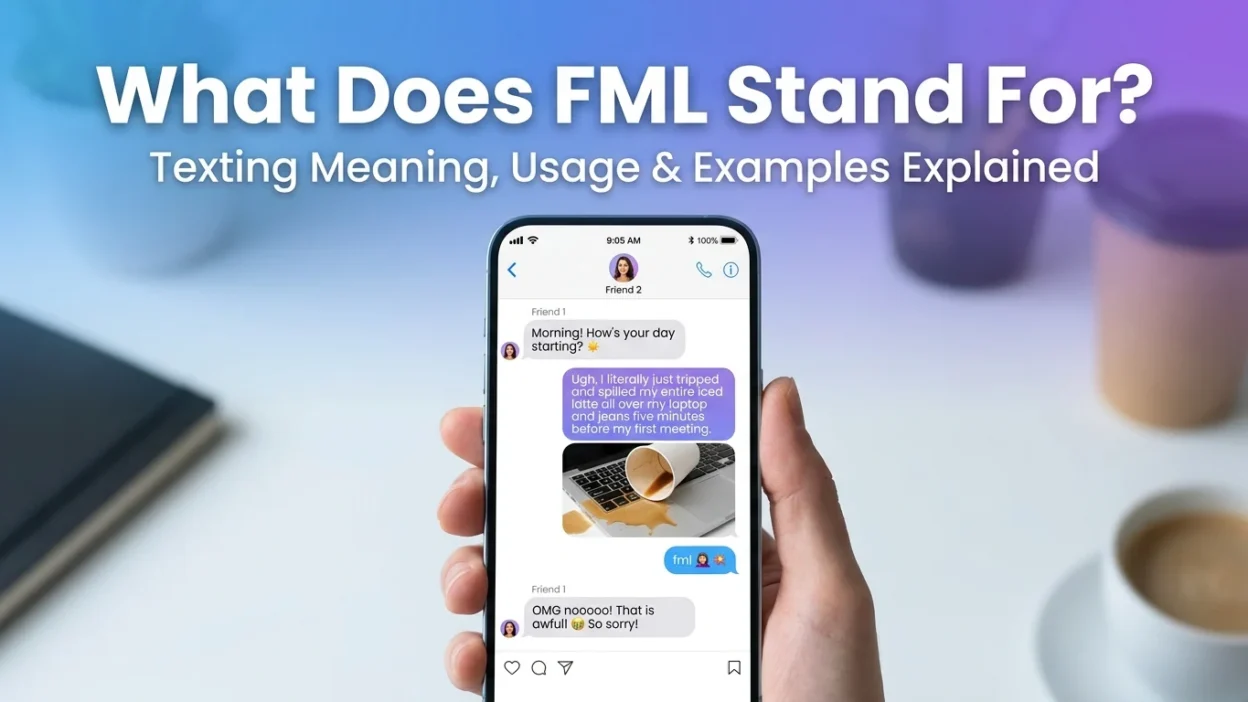
You’re scrolling through your phone, reading a group chat, and suddenly someone replies: “fml 😭.” You pause for a second.
It sounds serious, but also kind of funny? You’ve probably seen it on Instagram comments, Snapchat stories, or even in gaming chats when someone makes a mistake. The first time many people see it, they wonder if it’s a code, a joke, or something offensive.
The truth is, “FML” is one of the most common internet slang expressions used in everyday online conversations. It shows up when people are frustrated, tired, or joking about bad luck. In this article, you’ll learn exactly what it means, how to use it, where it’s used, and when you should avoid it.
Quick Answer: FML stands for “F*** My Life,” a slang expression people use to show frustration, disappointment, or humor about a bad situation.
Meaning of FML in Text
The abbreviation FML stands for “F* My Life.”** It is a popular texting abbreviation and social media slang used to express that something annoying, embarrassing, or unlucky has happened.
In simple words, it’s like saying:
- “this is so bad”
- “why does this always happen to me?”
- “i can’t believe this happened”
People don’t always mean it seriously. In fact, most of the time, it’s used in a funny or dramatic way rather than actual sadness.
Why people use FML
People use FML because:
- It saves time while texting
- It expresses strong emotion quickly
- It adds humor or drama to a situation
- It is widely understood in online chat culture
Example sentence
“I studied all night for the exam and still failed… fml.”
Bold Summary: FML is a slang expression used to show frustration or bad luck in a short, expressive, and often humorous way.
Where FML Is Commonly Used
The term FML is very popular in modern digital communication. You’ll find it almost everywhere people talk casually online.
Common platforms include:
- Text messages (SMS)
- WhatsApp chats
- Instagram comments and captions
- Snapchat stories
- TikTok comments
- Discord and gaming chats
- Online forums like Reddit
Tone of usage
The tone of FML is usually:
- Casual
- Informal
- Sometimes humorous or sarcastic
- Rarely formal (not used in professional writing)
People usually use it among friends or online communities where informal language is acceptable.
Real-Life Conversation Examples of FML
Here are some natural, modern texting examples showing how people actually use FML in chats:
- “missed the bus again… fml”
- “spilled coffee on my laptop fml”
- “forgot my homework at home fml”
- “got stuck in traffic for 2 hours fml”
- “my phone fell in water fml i’m done”
- “accidentally sent the text to my teacher instead of my friend fml”
- “i studied the wrong chapter for the test fml”
- “lost my game because of lag fml”
- “woke up late again fml”
- “dropped my food right after buying it fml”
These examples show that FML is often used in everyday small problems, not just big life issues.
When to Use and When Not to Use FML
Even though FML is common in online slang, it’s not suitable for every situation.
When to use FML
- Talking with friends online
- Casual social media posts
- Gaming chats or reactions
- Expressing mild frustration or humor
- Informal texting situations
When NOT to use FML
- School assignments or essays
- Work emails or professional messages
- Talking to teachers, bosses, or elders
- Formal public communication
- Serious or sensitive situations
Quick comparison table
| Context | Example Phrase | Why it works or doesn’t |
|---|---|---|
| Texting a friend | “missed the bus fml” | casual, relatable, okay |
| Instagram comment | “dropped my phone fml” | informal and common |
| Work email | “fml i forgot the report” | too informal and unprofessional |
| School essay | “fml” | inappropriate for formal writing |
Similar Slang Words and Alternatives
FML is part of a bigger group of internet slang used to express emotions quickly. Here are some similar expressions:
1. SMH (Shaking My Head)
Used when something is disappointing or ridiculous.
Example: “he forgot his own birthday smh”
2. OMG (Oh My God)
Used for surprise or shock.
Example: “omg i can’t believe this happened”
3. IDK (I Don’t Know)
Used when unsure about something.
Example: “idk what to do next”
4. LOL (Laugh Out Loud)
Used for something funny.
Example: “that joke was so bad lol”
5. RIP
Used jokingly for bad situations or loss.
Example: “forgot my password again rip”
6. BRB (Be Right Back)
Used when stepping away briefly.
Example: “brb getting food”
7. NGL (Not Gonna Lie)
Used to be honest about something.
Example: “ngl that movie was boring”
These terms are all part of online chat slang culture, helping people express emotions faster in digital conversations.
FAQs About FML
1. What does FML stand for in texting?
FML stands for “F*** My Life,” used to express frustration or bad luck in a short form.
2. Is FML a bad word?
The full phrase contains a swear word, but in texting, “FML” is often used casually and not always meant offensively.
3. Is FML used seriously or jokingly?
Most of the time, it is used jokingly or dramatically, not in a serious way.
4. Can I use FML on social media?
Yes, it is commonly used on platforms like Instagram, TikTok, Snapchat, and Twitter/X in informal posts.
5. Is FML appropriate for school or work?
No, it is not appropriate for formal or professional communication.
6. Who uses FML the most?
It is mostly used by teenagers and young adults who are active in online chat culture.
7. What is a softer alternative to FML?
You can use phrases like “ugh,” “bad luck,” or “not my day” if you want a cleaner version.
Final Thought
The phrase FML has become a major part of modern texting slang and online communication. It is a quick way to express frustration, disappointment, or even humor when things go wrong. While it includes a strong word in its full form, most people use it casually in informal chats, especially with friends or on social media.
Understanding terms like FML helps you better navigate digital conversations and stay updated with internet slang. Just remember to use it in the right setting—keep it casual, and avoid it in formal or professional communication.