Have you ever been chatting with a friend, scrolling through social media, or reading comments online when someone replied with a funny moving image? Maybe you wondered what that image format was called and why everyone seemed to use it.
For many people, the first time they heard the term GIF was during a text conversation, in a meme, or while browsing social media. It quickly became clear that GIFs were everywhere.
But what does GIF stand for, and why has it become such a big part of online communication? If you’ve ever been curious about the meaning behind this popular internet term, you’re in the right place.
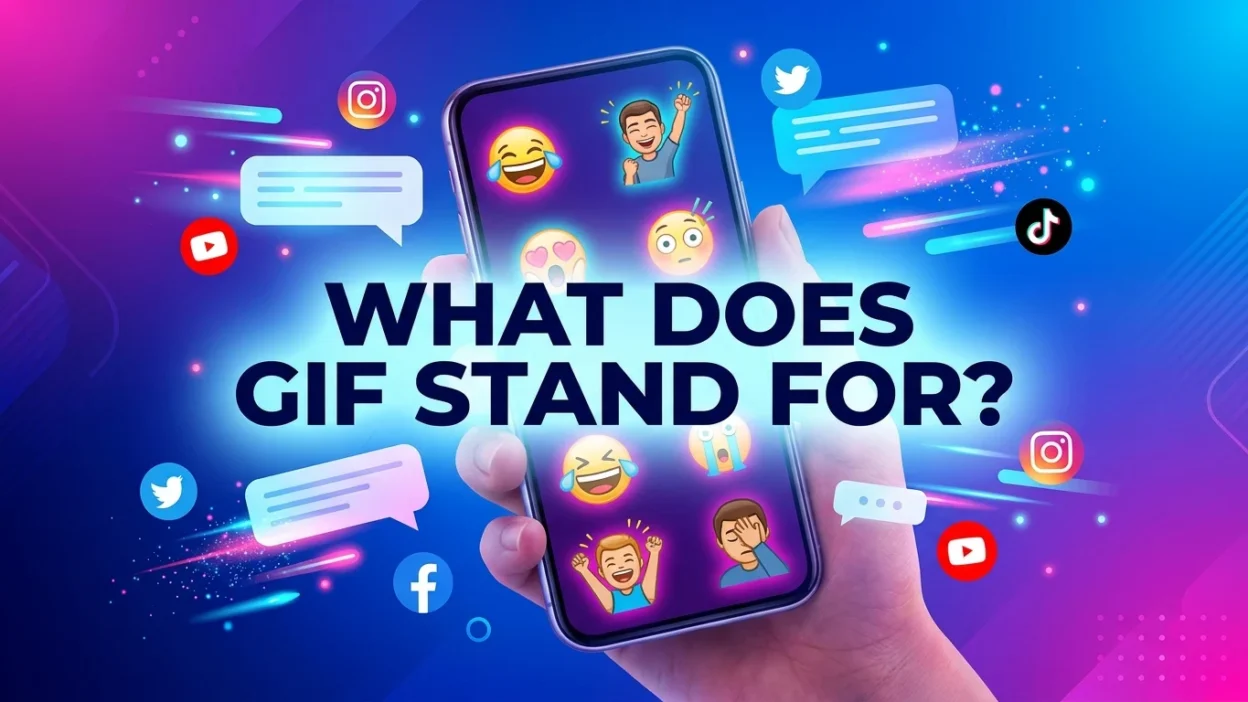
Quick Answer: GIF stands for Graphics Interchange Format, a digital image format that supports short animations and moving images.
What Does GIF Stand For in Text and Online Communication?
The full form of GIF is Graphics Interchange Format. It is a type of image file format that was created to display images efficiently on computers and the internet.
Today, when people mention a GIF in text messages, social media posts, or online chats, they usually mean a short animated image that repeats in a loop. These animations are often used to show emotions, reactions, jokes, or memorable moments from movies, TV shows, and viral videos.
People use GIFs because they can express feelings and reactions more quickly than words. Instead of typing a long explanation, someone can send a GIF that perfectly captures how they feel.
Example:
“that joke was hilarious, i’m sending a laughing GIF right now.”
Summary: GIF stands for Graphics Interchange Format, a popular image format used for short looping animations and online reactions.
Why Do People Use GIFs?
GIFs have become a major part of texting culture and social media slang because they make conversations more fun and expressive.
Here are a few reasons people love using GIFs:
- They show emotions quickly.
- They make conversations more entertaining.
- They help people react without typing long messages.
- They add humor to chats and comments.
- They are easy to share across platforms.
A well-chosen GIF can communicate excitement, surprise, happiness, frustration, or laughter in seconds.
Where Is GIF Commonly Used?
GIFs appear almost everywhere online. They are one of the most popular forms of visual communication on the internet.
Text Messages
Friends often send GIFs instead of typing responses.
Social Media Platforms
GIFs are commonly used on:
- X (Twitter)
- TikTok comments
- Snapchat
- Threads
Direct Messages (DMs)
Many people use GIFs in private conversations to react to messages.
Gaming Chats
Gamers often share GIFs in gaming communities and group chats.
Online Forums
Forum users frequently post GIFs to express reactions or emphasize opinions.
Workplace Messaging Apps
Some teams use GIFs in casual workplace conversations, although they should be used carefully in professional settings.
Tone of GIF Usage
The tone is usually:
- Casual
- Informal
- Friendly
- Playful
In some situations, GIFs can also feel neutral, but they are generally not considered formal communication.
Realistic GIF Conversation Examples
Here are some natural examples of how people use GIFs in everyday chats.
Example 1
person 1: i finally passed my driving test
person 2: sending the biggest celebration gif ever 🎉
Example 2
person 1: guess who forgot their password again
person 2: lol perfect facepalm gif moment
Example 3
person 1: the meeting got canceled
person 2: happy dance gif activated
Example 4
person 1: i stayed up all night studying
person 2: that’s definitely a tired gif situation
Example 5
person 1: our team won
person 2: victory gif incoming
Example 6
person 1: i just spilled coffee everywhere
person 2: i’m picturing that shocked gif right now
Example 7
person 1: the movie ending was wild
person 2: i need a speechless gif for that
Example 8
person 1: my package finally arrived
person 2: excited gif energy
Example 9
person 1: i accidentally sent the message to the wrong person
person 2: that’s an awkward gif moment
When to Use GIFs and When Not to Use Them
Understanding when to use GIFs can help you communicate more effectively online.
Do Use GIFs When:
- Chatting with friends.
- Replying on social media.
- Sharing reactions.
- Making conversations more fun.
- Participating in online communities.
Don’t Use GIFs When:
- Writing formal business emails.
- Communicating during serious situations.
- Sending official school or work documents.
- Discussing sensitive topics.
- Talking to people who may not understand internet culture.
GIF Usage Comparison Table
| Context | Example Phrase | Why It Works or Doesn’t Work |
|---|---|---|
| Friend chat | “sending a laughing gif” | Works because the conversation is casual |
| Group chat | “this deserves a celebration gif” | Works because it adds excitement |
| Social media comments | “perfect reaction gif” | Works because reactions are common |
| Business email | “please see this funny gif” | Doesn’t work because it may seem unprofessional |
| Serious discussion | “here’s a joke gif” | Doesn’t work because it may appear insensitive |
Similar Terms and Alternatives to GIF
Several other terms are often used alongside GIFs in online chat meaning and social media slang.
| Term | Meaning | When to Use It |
|---|---|---|
| Meme | Funny image, video, or joke | Sharing humor online |
| Emoji | Small digital icon | Quick emotional reactions |
| Sticker | Decorative image used in chats | Casual messaging |
| Reaction Image | Static image expressing emotion | Online discussions |
| Video Clip | Short video segment | When motion and sound are needed |
| Emote | Digital expression often used in gaming | Gaming and streaming communities |
| Animation | Moving digital artwork | Creative and visual content |
GIF vs Emoji
An emoji is a small symbol like 😊 or 😂.
A GIF is a moving image that can show more detailed emotions or reactions.
GIF vs Meme
A meme is usually a joke or viral image.
A GIF can be funny too, but it specifically refers to a moving image format.
The History of GIF
The GIF format was created in 1987 by the online service company CompuServe. The goal was to create an image format that could be shared efficiently across computer networks.
Over time, GIFs evolved from simple images into animated loops. As social media and messaging apps grew, GIFs became one of the internet’s favorite ways to communicate.
Today, billions of GIFs are shared every year across platforms and messaging services.
Why GIFs Matter in Modern Texting Culture
Modern digital communication moves quickly. People often prefer visual reactions over long messages.
GIFs help bridge the gap between text and emotion by adding:
- Humor
- Personality
- Emotion
- Context
- Entertainment
Because of this, GIFs have become an important part of online communication.
Whether someone is celebrating good news, reacting to a funny joke, or expressing disbelief, there’s usually a GIF that fits the moment perfectly.
Frequently Asked Questions
What does GIF stand for?
GIF stands for Graphics Interchange Format, a digital image format commonly used for short animated images.
Is GIF a texting abbreviation?
Not exactly. GIF is the name of a file format, but people often use the term in texting and online conversations when talking about animated images.
Are GIFs only used on social media?
No. GIFs are used in text messages, messaging apps, forums, gaming chats, social media platforms, and even some workplace chats.
Is sending a GIF considered informal?
Yes. GIFs are generally considered informal and casual forms of communication.
Do younger people use GIFs more often?
Younger users often use GIFs frequently, but people of all ages use them to communicate online.
Can GIFs be used professionally?
Sometimes. In casual workplace chats, a GIF may be acceptable. However, they are usually not suitable for formal business communication.
Can a GIF have sound?
No. Traditional GIF files do not contain sound. If audio is included, it is usually a video rather than a GIF.
Final Thought
If you’ve ever wondered what does GIF stand for, the answer is simple: Graphics Interchange Format. While it began as a technical image format, it has grown into one of the most recognizable parts of internet culture. GIFs help people express emotions, reactions, humor, and personality in a fast and visual way.
Whether you’re texting friends, commenting on social media, or chatting in online communities, understanding GIFs can help you communicate more naturally in today’s digital world.

Rohan Ahmad is a versatile digital creator and writer at ribacks.com, blending insights from digital marketing, design, and online strategy into engaging content. Passionate about practical knowledge and storytelling, he connects with readers through relatable articles that inspire learning, creativity, and growth across topics that matter to modern audiences.