
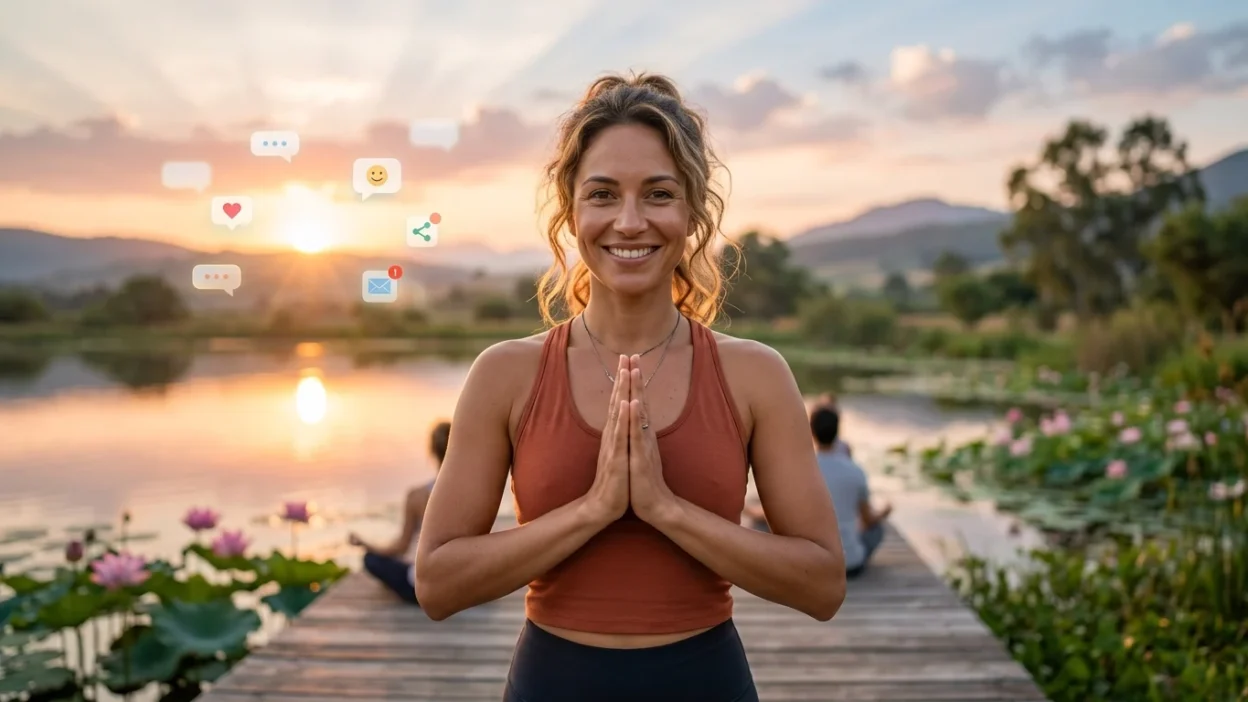
Meaning, Usage, Examples, and Online Communication Guide
Have you ever been scrolling through social media, watching a yoga video, or chatting with someone online and suddenly come across the word “Namaste”? Maybe someone ended their message with it, or perhaps you heard it in a meditation livestream. If you’re not familiar with the term, it can feel a little confusing at first.
Many people see “Namaste” in comments, captions, wellness communities, and online conversations without fully understanding what it means. While it isn’t a texting abbreviation or internet slang, it has become a popular word in digital communication. Understanding its meaning can help you use it correctly and appreciate its cultural significance.
Quick Answer
Namaste means “I bow to you” or “the divine in me honors the divine in you,” and it is commonly used as a respectful greeting or farewell.
What Does Namaste Meant?
The phrase Namaste comes from Sanskrit, an ancient language of India.
It is made up of two parts:
- Namah = bow, honor, or respect
- Te = to you
Together, Namaste is often translated as “I bow to you” or “I respectfully greet you.”
In modern usage, Namaste is a respectful greeting that can be used when meeting someone or saying goodbye. It is commonly associated with Indian culture, yoga, meditation, spirituality, and mindfulness practices.
Plain-English Explanation
Think of Namaste as a polite and respectful way of saying:
- hello
- goodbye
- greetings
- respect to you
- peace and kindness to you
Unlike many social media slang terms, Namaste carries a deeper meaning because it expresses respect and acknowledgment of another person.
Why Do People Use It?
People use Namaste because it:
- Shows respect
- Creates a peaceful tone
- Expresses kindness
- Reflects gratitude
- Connects with spiritual or cultural traditions
Example Sentence
“thank you for joining today’s yoga class. namaste.”
Summary: Namaste is a respectful greeting that means “I bow to you” and expresses honor, respect, and goodwill toward another person.
Where Is Namaste Commonly Used?
Although Namaste began as a traditional greeting in South Asia, it now appears in many online and offline spaces.
Social Media
People use Namaste in:
- Instagram captions
- Facebook posts
- TikTok wellness videos
- YouTube yoga channels
Example:
“starting the day with gratitude and positive energy. namaste.”
Text Messages
Friends who practice yoga or meditation may occasionally use Namaste in chats.
Example:
“hope you have a peaceful day. namaste.”
Comments and DMs
You may see Namaste in direct messages or comment sections where users want to express positivity and respect.
Online Communities
Namaste is popular in:
- Meditation groups
- Spiritual forums
- Wellness communities
- Mindfulness discussions
In-Person Conversations
Many people use Namaste while greeting others, especially in India and Nepal.
Tone of Namaste
| Situation | Tone |
|---|---|
| Greeting someone respectfully | Formal |
| Yoga class ending | Neutral |
| Spiritual conversation | Respectful |
| Friendly wellness chat | Casual to neutral |
| Professional setting | Depends on culture |
Overall, Namaste is usually considered respectful, polite, and positive rather than casual internet slang.
Realistic Conversation Examples
Here are some natural examples showing how Namaste appears in modern chats.
Example 1
person 1: good morning everyone
person 2: namaste, hope you’re all doing well
Example 2
friend: thanks for today’s meditation session
coach: you’re welcome. namaste
Example 3
user: loved your yoga tutorial
creator: thank you so much. namaste
Example 4
friend: sending positive vibes your way
friend 2: thank you, namaste
Example 5
member: great discussion today
admin: appreciate your participation. namaste
Example 6
user: your content always helps me relax
creator: glad to hear that. namaste
Example 7
friend: have a peaceful evening
friend 2: namaste and take care
Example 8
participant: thank you for sharing your wisdom
speaker: namaste, and thank you for listening
Example 9
user: i learned a lot from this workshop
host: wonderful to hear. namaste
When to Use Namaste
Using Namaste correctly helps maintain its respectful meaning.
Do Use Namaste When
✅ Greeting someone respectfully
✅ Ending a yoga or meditation session
✅ Participating in wellness communities
✅ Showing gratitude and kindness
✅ Speaking in culturally appropriate settings
Don’t Use Namaste When
❌ Mocking or joking about someone’s culture
❌ Using it sarcastically
❌ Replacing every greeting unnecessarily
❌ Using it without understanding its meaning
❌ Trying to sound trendy without respecting its origins
Context Comparison Table
| Context | Example Phrase | Why It Works |
|---|---|---|
| Yoga class | “thank you everyone, namaste” | Respectful closing |
| Meditation group | “peace and blessings, namaste” | Fits the tone |
| Friendly greeting | “namaste, how are you?” | Polite and respectful |
| Sarcastic comment | “yeah sure, namaste lol” | Doesn’t respect the meaning |
| Online argument | “whatever, namaste” | Sounds dismissive and inappropriate |
Similar Words and Alternatives
While Namaste has a unique meaning, there are several alternatives depending on the situation.
| Word | Meaning | Best Used When |
|---|---|---|
| Hello | Standard greeting | Everyday conversations |
| Greetings | Polite welcome | Formal communication |
| Peace | Wish for calm and harmony | Friendly messages |
| Respect | Showing admiration | Positive discussions |
| Salaam | Traditional greeting meaning peace | Cultural and religious settings |
| Welcome | Friendly reception | Hosting or greeting |
| Good day | Polite greeting | Formal communication |
| Blessings | Good wishes | Spiritual discussions |
Important Note
None of these alternatives carry the exact cultural and spiritual meaning of Namaste, but they can sometimes serve a similar purpose depending on the context.
FAQ About What Does Namaste Meant
Is Namaste a texting abbreviation?
No. Namaste is not a texting abbreviation or chat shorthand. It is a traditional greeting with cultural and spiritual significance.
What does Namaste literally mean?
The most common translation is “I bow to you.”
Is Namaste formal or informal?
Namaste is generally respectful and polite. It can be used in both formal and informal situations depending on the context.
Do people use Namaste on social media?
Yes. Many people use Namaste in captions, comments, wellness communities, yoga groups, and mindfulness discussions.
Is Namaste only used in yoga?
No. While yoga popularized it globally, Namaste is also used as a traditional greeting in everyday life, especially in South Asia.
Can I say Namaste instead of hello?
Yes, if it is culturally appropriate and used respectfully.
Can Namaste be misunderstood online?
Sometimes. People unfamiliar with the term may think it is internet slang, but it is actually a traditional expression of respect.
Final Thought
If you’ve ever wondered what does namaste meant, the answer is simple: it is a respectful greeting that means “I bow to you” and reflects kindness, honor, and goodwill. Unlike typical social media slang or texting abbreviations, Namaste carries cultural and spiritual significance that has been valued for generations.
Today, you’ll find it in yoga classes, meditation groups, online communities, social media posts, and everyday conversations. When used respectfully, Namaste can help create a positive and welcoming atmosphere both online and offline.