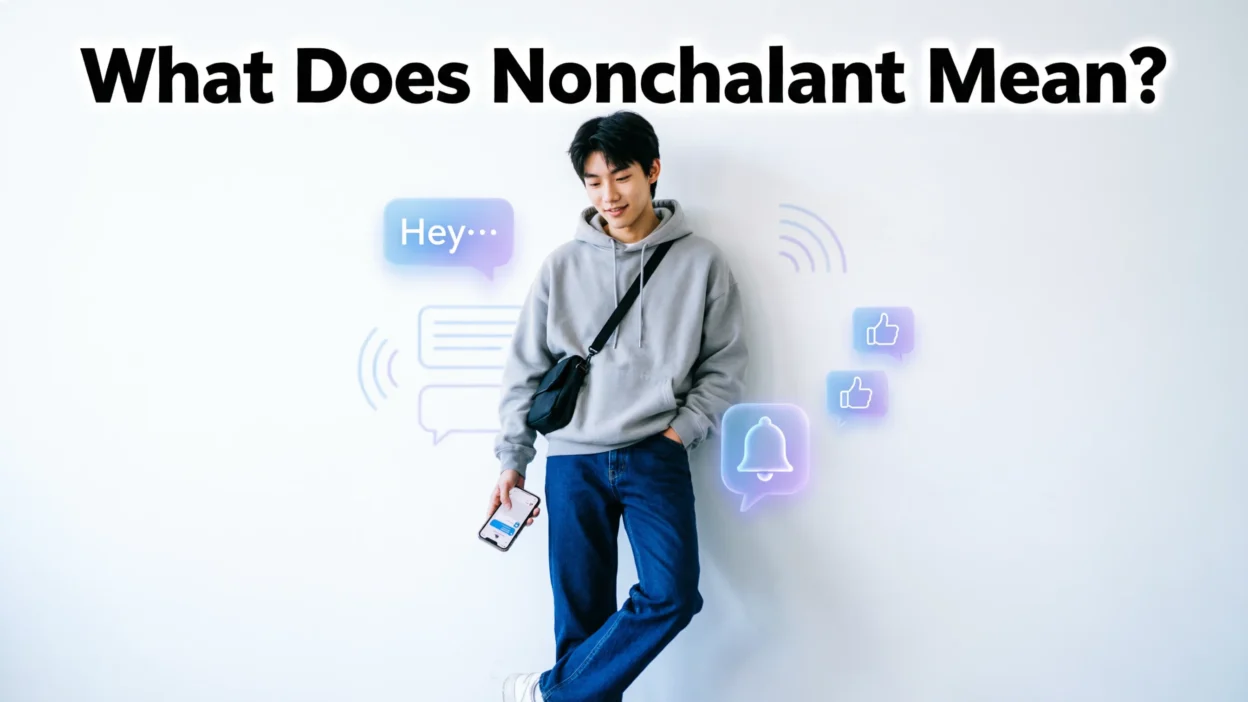
Have you ever been scrolling through TikTok, reading Instagram comments, or chatting with friends when someone said, “he’s so nonchalant,” and you wondered what they meant? Maybe it sounded like slang, or maybe it seemed like everyone understood it except you.
A lot of people first come across the word nonchalant in social media posts, memes, or online conversations. It often describes someone’s attitude rather than something they say.
In today’s texting culture, the term has become very popular, especially among younger users who use it to describe people who seem calm, unbothered, or emotionally distant.
If you’re curious about what does nonchalant mean, this guide explains everything in a simple and easy-to-understand way.
Quick Answer: Nonchalant means acting calm, relaxed, and not showing much emotion or concern, even in situations where others might react strongly.
What Does Nonchalant Mean in Text?
The word nonchalant is not a texting abbreviation or chat shorthand. It is a regular English word that has become very popular in social media slang and online conversations.
When someone is described as nonchalant, it means they appear:
- Calm
- Unbothered
- Relaxed
- Cool under pressure
- Not overly emotional
In texting and social media, people often use the term to describe someone who seems indifferent or doesn’t react much to things that would normally excite, upset, or surprise others.
Plain-English Explanation
Imagine you tell your friend that you just won concert tickets, and they simply reply, “that’s cool.”
That relaxed reaction could be described as nonchalant.
Sometimes being nonchalant is seen as confident and attractive. Other times, it may seem like someone doesn’t care enough.
Why Do People Use It?
People use the word because it quickly describes a specific personality trait or behavior. Instead of saying, “he acts calm and doesn’t show many emotions,” they simply say, “he’s nonchalant.”
Example Sentence
“she stayed nonchalant even after hearing the surprising news.”
Bold Summary: Nonchalant means acting calm, cool, and unconcerned, without showing strong emotions or reactions.
Where Is Nonchalant Commonly Used?
The term appears in many forms of digital communication and everyday conversation.
Text Messages
Friends often use it when describing someone’s personality or reaction.
Example:
“why is he always so nonchalant?”
Social Media
You’ll frequently see the word on:
- TikTok
- X (Twitter)
- Snapchat
- Threads
Creators often use it in captions, videos, and relationship discussions.
Comments Sections
People may comment:
“his nonchalant energy is unmatched.”
DMs and Private Chats
Friends often use the term while talking about relationships, dating, or social situations.
Gaming Chats
Gamers may use it to describe players who stay calm even during intense matches.
Online Forums
Discussion communities use the word when analyzing behavior, confidence, and communication styles.
Tone of the Word
| Situation | Tone |
|---|---|
| Texting | Casual |
| Social Media | Informal |
| Friend Conversations | Casual |
| Online Forums | Neutral |
| Professional Writing | Formal/Neutral |
While the word itself is a standard English word, its modern online usage is mostly casual and informal.
Realistic Conversation Examples
Here are some natural examples of how people use nonchalant in modern texting culture.
Example 1
friend 1: did you see her reaction?
friend 2: yeah, she was so nonchalant about it
Example 2
alex: i told him i got the promotion
sam: and?
alex: he just said “nice”
Example 3
friend 1: why does he text so dry?
friend 2: he’s just naturally nonchalant
Example 4
emma: everyone was freaking out
olivia: meanwhile jake stayed nonchalant
Example 5
friend 1: do you think she likes me?
friend 2: hard to tell, she’s super nonchalant
Example 6
player 1: we almost lost that match
player 2: bro was nonchalant the whole time
Example 7
friend 1: he never gets nervous
friend 2: that’s his nonchalant personality
Example 8
mia: i sent the message hours ago
ava: and he still hasn’t replied?
mia: yep, he’s so nonchalant
Example 9
friend 1: everyone was celebrating
friend 2: and she was just sitting there looking nonchalant
When to Use Nonchalant
Knowing when to use the term can help you sound natural in conversations.
Do Use It When:
✅ Describing calm behavior
✅ Talking about someone’s personality
✅ Discussing social media content
✅ Explaining relaxed reactions
✅ Talking about confidence or composure
Don’t Use It When:
❌ Describing someone who is excited
❌ Talking about intense emotional reactions
❌ Referring to panic or stress
❌ Replacing every word for “calm”
❌ Using it where strong concern is being shown
Quick Comparison Table
| Context | Example Phrase | Why It Works or Doesn’t Work |
|---|---|---|
| Calm reaction | “he stayed nonchalant during the meeting” | Works because he remained relaxed |
| Unexpected news | “she seemed nonchalant after hearing it” | Works because she didn’t react strongly |
| Excited response | “he was nonchalant and screaming with joy” | Doesn’t work because excitement is the opposite |
| Nervous situation | “she was nonchalant and panicking” | Doesn’t work because the meanings conflict |
Similar Slang Words and Alternatives
Several words have meanings similar to nonchalant, although each has a slightly different feel.
| Word | Meaning | When to Use It |
|---|---|---|
| Chill | Relaxed and easygoing | Casual conversations |
| Unbothered | Not affected by drama or criticism | Social media discussions |
| Cool | Calm and confident | Everyday chats |
| Laid-back | Relaxed personality | Describing people |
| Casual | Not serious or intense | General conversations |
| Relaxed | Free from stress | Everyday communication |
| Composed | Calm and controlled | More formal situations |
| Indifferent | Not showing interest | When someone seems not to care |
| Easygoing | Flexible and relaxed | Personality descriptions |
Chill
Often used in texting culture to describe someone relaxed and comfortable.
Unbothered
Popular on social media when someone ignores criticism or negativity.
Laid-Back
Describes a naturally relaxed personality rather than a specific reaction.
Composed
Usually used in formal situations where someone remains calm under pressure.
Indifferent
Can be similar to nonchalant, but often suggests a lack of interest or caring.
Why Has Nonchalant Become Popular on Social Media?
Social media has made personality labels more common than ever.
Many users discuss:
- Dating behavior
- Relationship dynamics
- Confidence
- Emotional intelligence
- Communication styles
Because of this, words like nonchalant have become popular ways to describe how people act online.
TikTok relationship discussions especially helped make the term more common among younger audiences.
Many videos focus on questions such as:
- “Is he confident or just nonchalant?”
- “Why are nonchalant people hard to read?”
- “Is being nonchalant attractive?”
As a result, the word appears frequently in comments, captions, and informal chat conversations.
Frequently Asked Questions (FAQ)
What does nonchalant mean in texting?
In texting, nonchalant means acting calm, relaxed, and emotionally unbothered without showing strong reactions.
Is nonchalant a texting abbreviation?
No. Nonchalant is a standard English word, not a texting abbreviation or chat shorthand.
Is being nonchalant a good thing?
It depends on the situation. Some people view it as confidence and emotional control, while others may see it as disinterest.
Is nonchalant positive or negative?
It can be either. The meaning depends on context and how others interpret the behavior.
Do young people use nonchalant on social media?
Yes. The term is very popular among Gen Z and younger social media users, especially on TikTok and Instagram.
Does nonchalant mean someone doesn’t care?
Not always. A nonchalant person may care deeply but choose not to show strong emotions.
Can nonchalant describe both men and women?
Yes. The word can be used to describe anyone who appears calm, relaxed, and unbothered.
Final Thought
If you’ve been wondering what does nonchalant mean, the answer is simple: it describes someone who stays calm, relaxed, and seemingly unconcerned, even when others might react emotionally. While it isn’t a texting abbreviation, it has become a popular part of social media slang and online chat culture. Whether you’re reading comments, sending DMs, scrolling TikTok, or chatting with friends, understanding the meaning of nonchalant can help you better understand modern digital communication and the personalities people talk about online.

Rohan Ahmad is a versatile digital creator and writer at ribacks.com, blending insights from digital marketing, design, and online strategy into engaging content. Passionate about practical knowledge and storytelling, he connects with readers through relatable articles that inspire learning, creativity, and growth across topics that matter to modern audiences.