
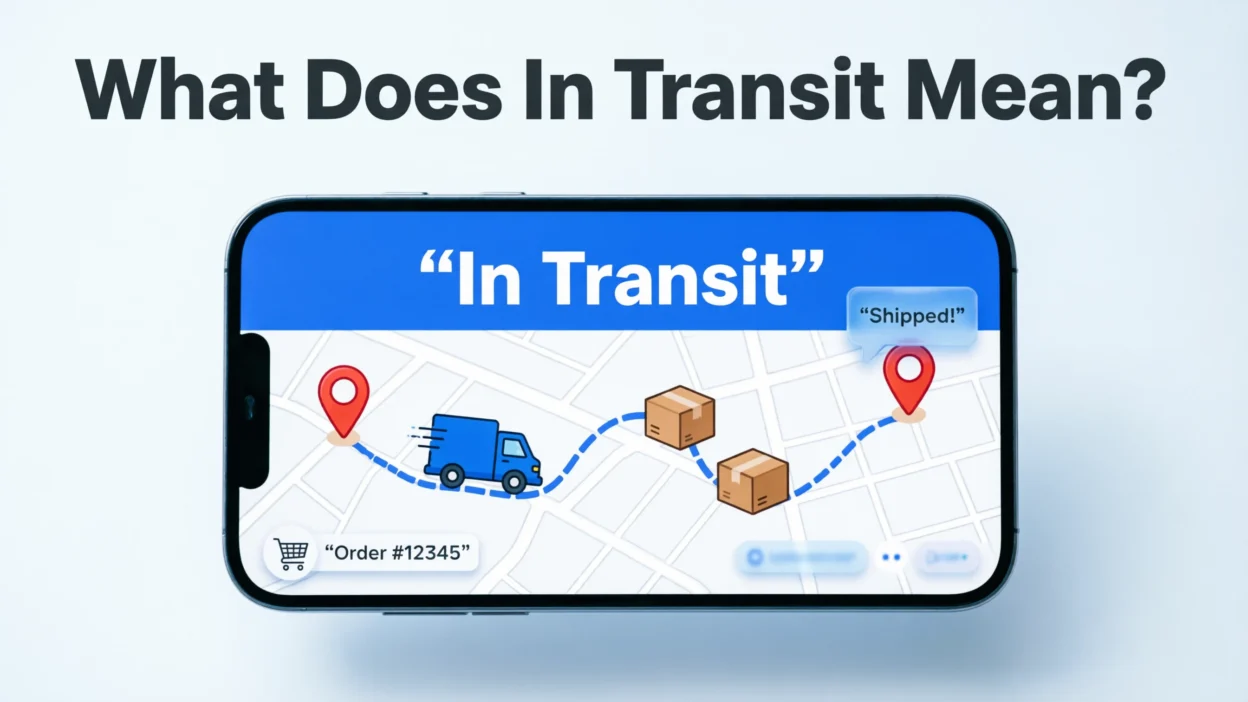
Have you ever ordered something online, checked the tracking page, and suddenly saw the words “in transit”? A lot of people feel confused the first time they see it. You might wonder if your package is lost, delayed, or already close to your house.
The same phrase also pops up in travel updates, business talks, and even casual online chats. Because it shows up in so many places, many people search for the real meaning behind it.
The good news is that the phrase is actually simple once you understand it. Whether you saw it in a text message, delivery update, or social media post, this guide will explain everything in easy words.
Quick Answer:
“In transit” means something or someone is currently moving from one place to another and has not reached the final destination yet.
What Does In Transit Mean in Text?
The phrase “in transit” usually means that a person, package, vehicle, or item is on the way somewhere. It is commonly used in shipping, travel, and delivery tracking.
Unlike internet slang abbreviations, “in transit” is a normal English phrase. There is no short form or hidden meaning behind it. People use it to explain movement between locations.
For example:
“your order is in transit and should arrive tomorrow.”
In plain English, this means the package has already been shipped and is currently traveling to you.
People use the phrase because it quickly tells someone that progress is happening. The item or person has left the starting point but has not arrived yet.
One-line summary: “In transit” simply means on the way to a destination.
Where Is “In Transit” Commonly Used?
The phrase appears in many real-life and online situations. It is not only used by delivery companies.
Shipping and Package Tracking
This is the most common use today. Online stores and delivery companies show “in transit” when your package is moving through the shipping network.
Examples include:
- Online shopping orders
- Courier tracking updates
- International shipping
- Postal services
Travel and Transportation
Airports, train stations, and travel apps also use the phrase.
Example:
- “the passengers are currently in transit.”
This means travelers are moving between locations or waiting for connecting transport.
Business and Logistics
Companies use the phrase when products, documents, or goods are moving between warehouses or offices.
Casual Online Chats
Sometimes people jokingly use it in texts or social media.
Example:
- “i’m in transit rn”
This simply means:
- “i’m on my way right now.”
Tone of the Phrase
The tone of “in transit” is usually:
- Neutral
- Informal in texting
- Professional in shipping/business
It is not considered slang, rude, or offensive.
Full Meaning of In Transit
Let’s break the phrase down into simple parts.
- In = currently inside or during something
- Transit = movement from one place to another
Together, the phrase means:
“currently moving between places.”
This does not always mean the item is actively driving at that exact second. A package marked “in transit” may still stop at warehouses, sorting centers, airports, or delivery hubs before reaching the final address.
That is why shipping updates can stay on “in transit” for several days.
Why People Use the Phrase
People use “in transit” because it is:
- Short
- Clear
- Easy to understand
- Useful for updates
Instead of writing a long explanation, companies and people simply say:
- “it’s in transit.”
That instantly tells others the item or person is still traveling.
Realistic Conversation Examples
Here are some natural texting and online chat examples using “in transit.”
friend 1: where’s your package?
friend 2: still in transit sadly
mom: when are you getting home?
son: i’m in transit rn
buyer: my order hasn’t arrived yet
seller: it’s currently in transit
friend: did your new phone come?
friend 2: nope, it’s in transit until tomorrow
coworker: where are the documents?
manager: they’re in transit from the main office
traveler: my flight got delayed during transit
friend: are you almost here?
friend 2: yup, in transit
customer: why is tracking not updating?
support: your package is still in transit
roommate: pizza here yet?
friend: nah, driver says it’s in transit
gamer: hopping on soon, currently in transit home
When to Use “In Transit”
The phrase works best when talking about movement or delivery.
Do Use It When:
- Talking about shipped packages
- Explaining travel status
- Mentioning someone is on the way
- Giving logistics updates
- Referring to transportation
Don’t Use It When:
- Something already arrived
- Something has not shipped yet
- Talking about emotions or feelings
- Casual slang situations where simpler wording fits better
Quick Comparison Table
| Context | Example Phrase | Why It Works |
|---|---|---|
| Package delivery | “your order is in transit” | The item is moving |
| Travel | “we’re in transit to dubai” | People are traveling |
| Already arrived | “the package is in transit at my house” | Incorrect because it arrived |
| Not shipped yet | “it’s in transit but still at the warehouse” | Confusing if it never left |
Similar Words and Alternatives
Many other phrases have a similar meaning to “in transit.” Here are some common alternatives.
| Word or Phrase | Meaning | Best Use |
|---|---|---|
| On the way | Moving toward destination | Casual texting |
| Shipped | Sent out already | Online shopping |
| En route | Traveling somewhere | Formal/professional |
| Out for delivery | Arriving very soon | Delivery tracking |
| Moving | Changing location | General use |
| Traveling | Going somewhere | People and trips |
| Dispatched | Officially sent | Business/logistics |
“On the Way” vs “In Transit”
These phrases are similar, but slightly different.
- On the way sounds more casual.
- In transit sounds more official or professional.
Example:
- “i’m on the way” sounds natural in texting.
- “your package is in transit” sounds normal in tracking systems.
Why “In Transit” Matters in Modern Communication
Today, people constantly track orders, flights, rides, and deliveries online. Because of this, the phrase “in transit” has become part of everyday digital communication.
Apps from shopping websites, food delivery services, airlines, and shipping companies use it daily.
It helps people:
- Know the current status
- Understand delays
- Follow package movement
- Reduce confusion
Even social media users now casually say:
- “i’m in transit”
instead of: - “i’m traveling.”
That shows how common the phrase has become in texting culture and informal chat.
Common Misunderstandings About In Transit
Some people think “in transit” means a package will arrive the same day. That is not always true.
A package can remain in transit for:
- Hours
- Days
- Even weeks for international shipping
Another misunderstanding is thinking the item is lost. Usually, it simply means the package is still moving through the delivery network.
Tracking systems sometimes update slowly too, so delays are normal.
FAQ About “What Does In Transit Mean”
Does “in transit” mean delivered?
No. It means the item is still traveling and has not arrived yet.
Is “in transit” good or bad?
Usually good. It means progress is happening and the shipment is moving.
How long does “in transit” last?
It depends on distance, shipping speed, weather, and delivery company schedules.
Can people say “I’m in transit”?
Yes. People use it to mean they are currently traveling or on the way.
Is “in transit” slang?
No. It is a standard English phrase, not internet slang.
Why does my package say “in transit” for many days?
Packages often stop at sorting centers and shipping hubs before delivery.
What’s the difference between “shipped” and “in transit”?
“Shipped” means the package was sent out. “In transit” means it is actively moving through the delivery process.
How “In Transit” Is Used on Social Media
Social media users often use the phrase casually in captions, comments, and stories.
Examples:
- “currently in transit ✈️”
- “coffee in transit to me”
- “brain still in transit after that exam”
Sometimes people use it humorously to describe being mentally tired or not fully awake yet.
This modern online use makes the phrase feel more relatable and less formal than before.
Final Thought
If you were wondering what “in transit” means, the answer is simple: it means something or someone is currently moving toward a destination. The phrase is most common in shipping and package tracking, but people also use it in travel updates, business communication, texting, and social media chats.
Understanding this phrase can help you avoid confusion when checking deliveries, travel plans, or online updates. In today’s digital world, “in transit” has become a normal part of everyday communication, especially in texting culture and online tracking systems.