The first time many people hear the word “sus,” it’s usually during an online game, TikTok video, or funny group chat. Someone suddenly types, “that’s kinda sus,” and everyone else seems to understand immediately. If you’re new to internet slang, it can feel confusing at first. Is it an insult? A joke? A secret code?
The truth is that “sus” became one of the most popular slang words online because it’s short, funny, and easy to use in almost any casual conversation. Thanks to memes, gaming culture, and social media apps, the term spread everywhere very quickly. If you’ve been wondering what sus means in text, this guide explains it in the easiest way possible.
Quick Answer:
Sus means “suspicious” or “someone acting strange, shady, or untrustworthy” in texting and online slang.
What Does Sus Mean in Text?
The word sus is simply a shortened version of:
- Sus = Suspicious
People use it when someone’s behavior feels strange, questionable, or untrustworthy.
Plain-English Meaning
In simple words, sus means:
👉 acting weird
👉 looking suspicious
👉 seeming dishonest
👉 doing something shady
Sometimes people also use it jokingly when teasing friends online.
Why People Use Sus
People use sus because:
- it’s faster than typing “suspicious”
- it sounds funny and modern
- it became popular in gaming culture
- it fits casual online conversations
Example Sentence
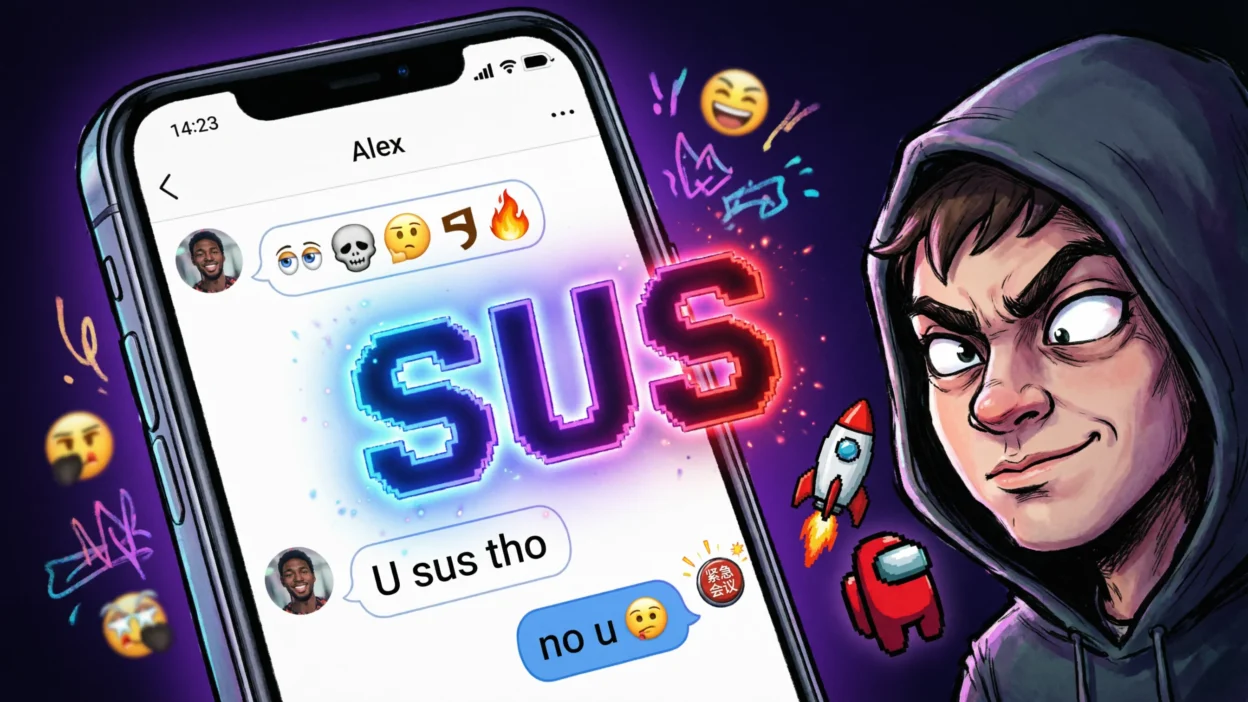
- “why are you acting so sus?”
This means:
👉 “why are you acting suspicious or strange?”
👉 Summary: Sus means suspicious and is used when someone seems strange, shady, or untrustworthy online.
How Did Sus Become Popular?
The slang word became extremely popular through the online game Among Us.
In the game, players try to figure out who the “impostor” is. Gamers often typed:
- “red is sus”
- “blue acting sus”
This spread quickly across:
- TikTok
- YouTube
- Discord
- Twitch
- Snapchat
- memes and reaction videos
Soon, even people who never played the game started using the word.
Where Is Sus Commonly Used?
Today, sus is everywhere online.
Common Places You’ll See Sus
- texting conversations
- TikTok comments
- gaming chats
- Discord servers
- Snapchat messages
- Instagram memes
- Twitter/X posts
- YouTube comments
Tone of Sus
The tone is usually:
- Casual: yes
- Informal: yes
- Neutral: sometimes
- Formal: no
Sus belongs strongly to modern internet slang and online chat culture.
Realistic Conversation Examples
Here are realistic examples showing how people use sus in online conversations:
- why you being so sus rn?
- nah that story sounds sus
- he went quiet all of a sudden… sus
- that website looks kinda sus
- bro hiding the group chat is sus
- you only text when you need something. sus 😂
- red acting sus again
- that deal seems super sus
- why’d you delete the message? that’s sus
- everything about this feels sus honestly
These examples show how the term is usually playful, casual, or joking.
When to Use and When NOT to Use Sus
Even though sus is popular, it doesn’t fit every situation.
✅ When to Use Sus
Use it when:
- chatting with friends
- gaming online
- joking in group chats
- commenting on social media
- talking casually online
❌ When NOT to Use Sus
Avoid using it when:
- writing professional emails
- speaking formally
- talking to teachers or employers
- discussing serious legal issues
- creating academic writing
Comparison Table
| Context | Example Phrase | Why It Works / Doesn’t Work |
|---|---|---|
| gaming chat | red is sus | classic slang use |
| friend texting | that excuse sounds sus | casual and natural |
| business email | this meeting seems sus | too informal |
| school essay | the suspect acted sus | inappropriate wording |
Similar Slang Words and Alternatives
There are many words similar to sus in texting culture.
| Slang | Meaning | Best Use |
|---|---|---|
| shady | dishonest or suspicious | casual conversations |
| sketchy | unsafe or suspicious | online warnings |
| weird | strange behavior | general use |
| fishy | suspicious situation | relaxed chats |
| cap | lying or fake | social media slang |
Short Explanations
Shady
Used when someone seems dishonest or sneaky.
Sketchy
Common for suspicious places, people, or websites.
Cap
Means someone is lying or exaggerating.
Why Sus Became So Popular Online
Sus became popular because it’s:
- short
- funny
- flexible
- meme-friendly
- easy to understand
Internet culture loves quick slang that can fit many situations. Sus works perfectly because it can be serious or playful depending on the conversation.
The word also became part of meme culture, helping it spread far beyond gaming communities.
Is Sus Always Negative?
Not always.
Sometimes people use sus seriously when they truly don’t trust something.
Other times, it’s just playful teasing between friends.
Serious Example
- “that link looks sus. don’t click it.”
Joke Example
- “you ate my fries again? sus behavior 😂”
Tone and context matter a lot.
FAQ About What Sus Means
1. What does sus mean in text?
Sus means suspicious or acting strange.
2. Is sus a bad word?
No. It’s casual internet slang.
3. Where did sus come from?
It became very popular through the game Among Us.
4. Is sus still popular?
Yes. People still use it often online and in memes.
5. Can sus be used jokingly?
Yes. Friends often use it playfully.
6. Is sus formal or informal?
It is very informal.
7. Should I use sus in professional settings?
No. It’s best for casual texting and social media only.
Final Thoughts
If you’ve been wondering what does sus mean, the answer is simple: it means suspicious or someone acting strange, shady, or questionable.
The word exploded in popularity thanks to gaming culture, memes, and social media apps like TikTok and Discord. Today, sus is one of the most recognizable pieces of internet slang and appears constantly in texting conversations, online chats, and memes.
Understanding slang like sus makes it easier to follow modern digital communication and connect naturally with today’s online culture.